
William Spreat (1816-1897)
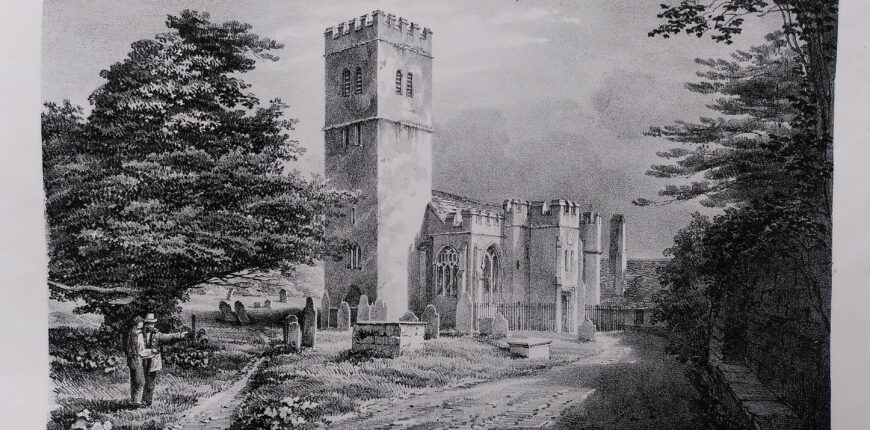
Picturesque sketches of the churches of Devonshire: drawn from nature and on stone (1842)
In June 1897 the Exeter and Plymouth Gazette reported the death of William Spreat, “an Old Exonian” who had been “well known as a lithographer and artist in Exeter many years ago”. From the 1840s onwards, he had worked extensively as an engraver, publisher, and bookseller in the city, and had also produced landscape paintings of local scenery. In his seminal work on Devon topographical prints (1977), J. V. Somers-Cocks describes him “one of Devon’s most important recorders of scenery”, and one whose works “would repay further study”.

Spreat was born in Exeter in 1816, the son of a bookseller, and baptised at St. Sidwell’s church. He showed artistic talent from an early age and published his first major work, Picturesque sketches of the churches of Devonshire, when he was only 26. This was an ambitious project, comprising seventy-four views issued in eighteen parts, and it took three years to complete. Following contemporary fashions for the picturesque, Spreat framed local churches within natural landscapes, and often included rustic figures to add charm. In his introduction to the series, Spreat acknowledges the growing interest in ecclesiastical architecture at the time, and particularly the work of the Exeter Diocesan Architectural Society, of which he himself was a member. However, he stresses that his aim here was not to capture architectural details, but to elicit an emotional response. He hoped that his drawings, “taken in the most picturesque point of view”, would recall the feelings of awe and contemplation which “are excited in a visit to the churches themselves”. Nevertheless, Picturesque sketches now provides a valuable record of local ecclesiastical architecture in the early nineteenth century, including churches at Bicton, Dartington, and Heavitree which were afterwards demolished or rebuilt. It also captures incidental details of life in Victorian Devon, such as class demographics, occupations, leisure pursuits, and fashions in dress.


Picturesque sketches cemented Spreat’s reputation as an artist. We are one of only two UK research libraries which hold the work, and we are fortunate in having two bound copies; one with a complete set of plates, and one with fifty-four plates. Moreover, we also hold a complete set of unbound issues in their original publisher’s wrappers. These were usually discarded when prints were bound together or individually framed, but can provide important publication details. Our unbound issues of Picturesque sketches show the original order of publication, the names of subscribers, and include advertisements that reveal how the project sat within Spreat’s wider commercial enterprise. A notice in issue No. 14, for instance, informs subscribers that the rest of the series will be produced using new ‘lithotint’ techniques. Spreat goes on to say that “Gentlemen and Ladies wishing to have any particular Drawing multiplied, will find this method by far the best”, and that examples will soon be ready to view at his business premises. Evidently, these prints were not only intended to display Spreat’s artistic skill, but also to advertise his abilities as a lithographer and publisher.
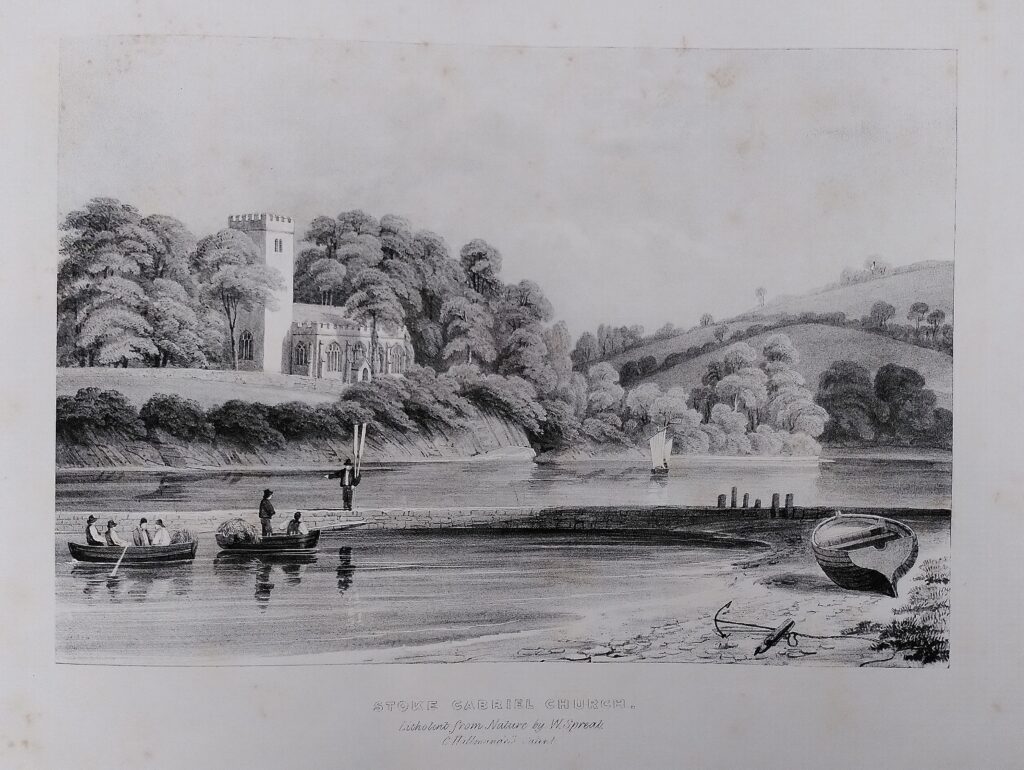
Spreat went on to produce several other collections of Devon views, including River scenery of Devon; first series, the Teign (1844), Dartmoor and its borders (c.1845), Views in South Devon (c.1845-c.1850), and Views of the scenery in North Devon (c.1850). He also produced innumerable plates for other authors and artists; for instance, he lithographed and printed the views in R. T. Wreford’s Six views of Berry Pomeroy (1850) – another star item from our arts section. Spreat’s name remained ubiquitous in local publishing for much of the nineteenth century, and the evolving nature of his business can be seen in census returns which list him variously as an artist, landscape painter, lithographer, draughtsman, publisher and photographer. He was always quick to embrace and commercialise new printing technologies, including lithotinting in the 1840s, and stereography and photography from the 1850s onwards. In later life he returned to oil painting, continuing to exhibit locally into the 1890s, and his landscapes were generally praised as “bright and enjoyable works of art”.