R. T. Wreford (1826-1901)
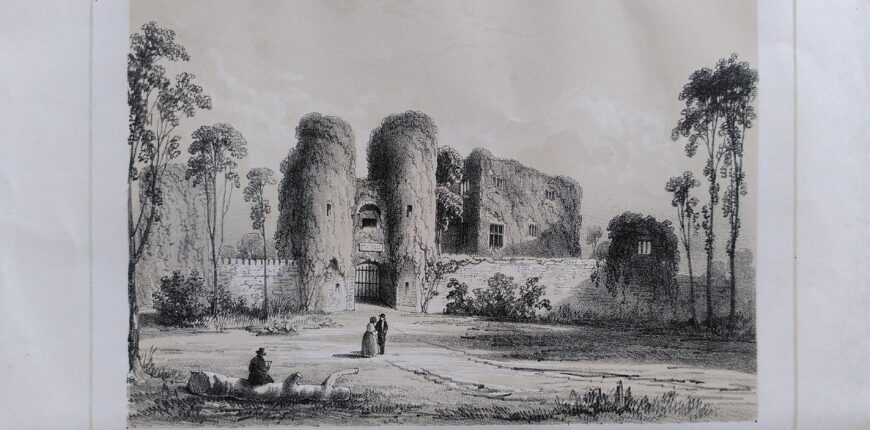
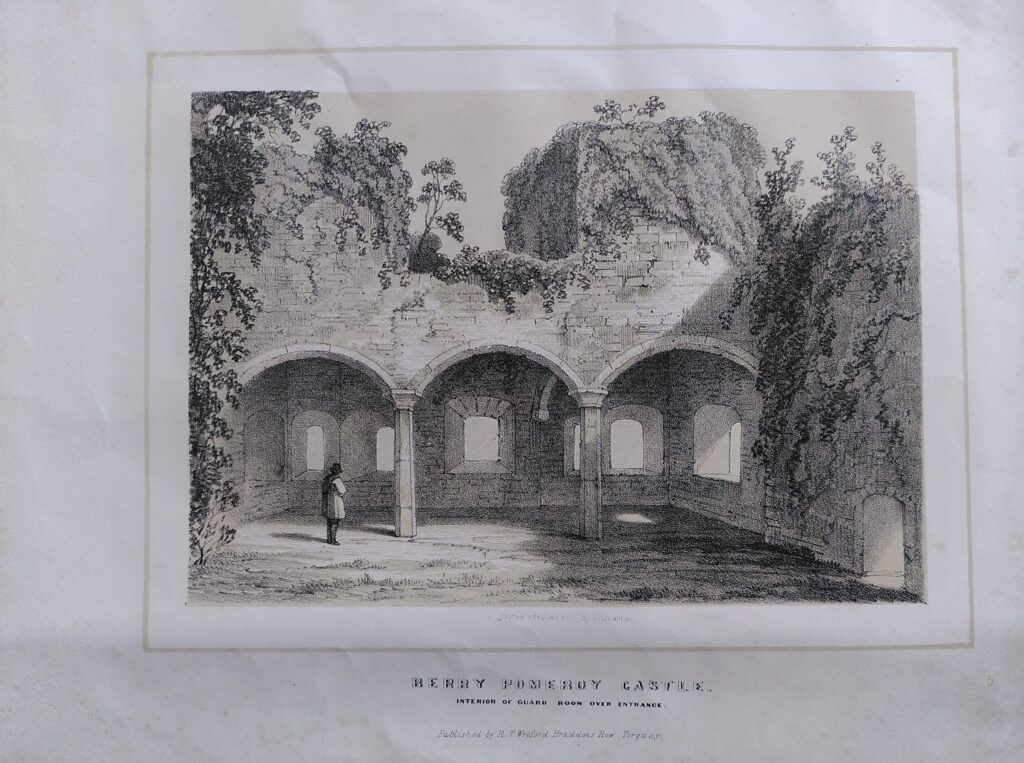
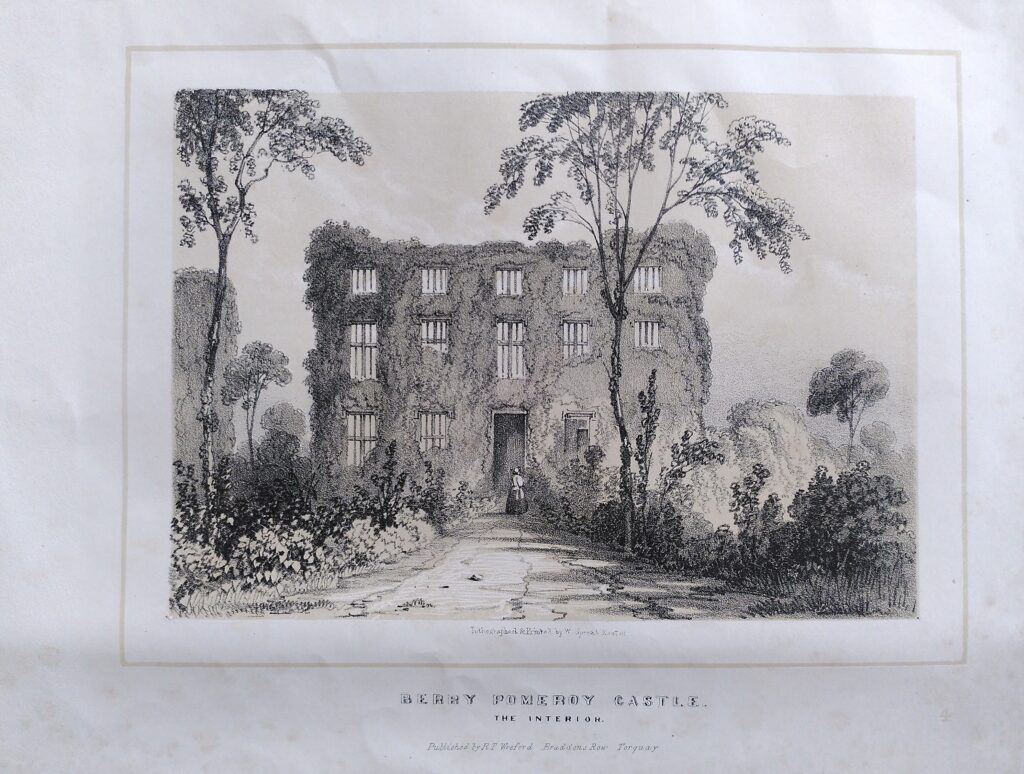
Six views of Berry Pomeroy Castle (1850)
The ruins of Berry Pomeroy Castle, historic seat of the Seymour family, have long been an attraction for visitors to South Devon. After its demolition in the late seventeenth century, people came to gaze on the humbling spectacle of “glory l[ying] in the dust”, as described in John Prince’s Worthies of Devon (1701). Prince’s dramatic account of “broken walls, which seem to mourn their own approaching funerals” shows how the derelict manor inspired reflection on human frailty and the impermanence of all earthly things.
In the late eighteenth century, the growing popularity of the picturesque aesthetic gave further interest. In his History of Totnes and Berry-Pomeroy Castle (c. 1825), John Hannaford recommended the “romantic beauties” of the spot to tourists, writing
“[w]hether we behold the Ruins of BERRY-POMEROY CASTLE as the remains of Feudal Grandeur, and suffer our imagination to invest them … with some portion of their departed Glory; – or whether we allow the picturesque and romantic beauties of those Ruins … to have their due effect; whilst any vestige of them shall remain, so long must they be [page end] regarded by the eye of taste with no common interest.” (47-48)
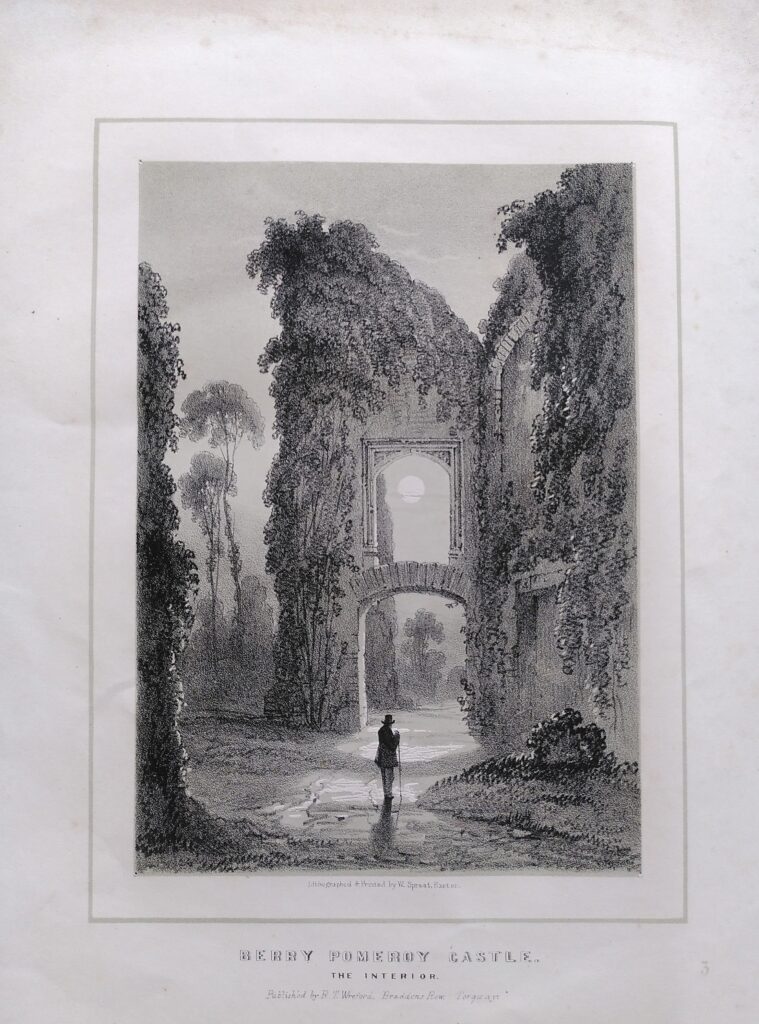
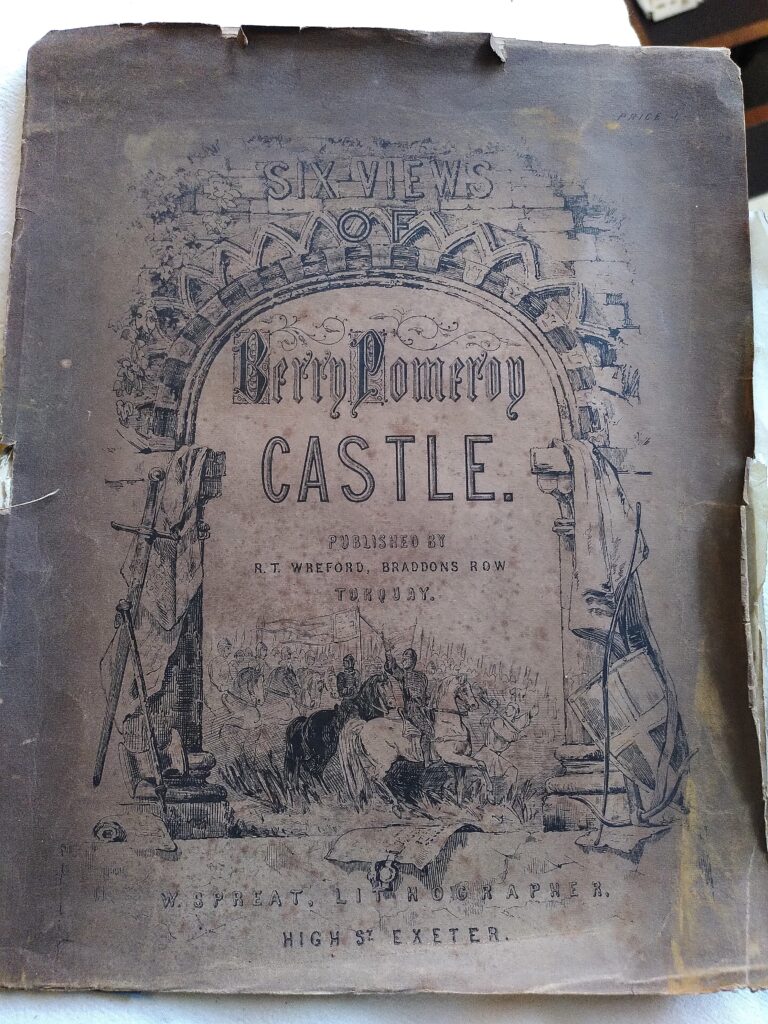
These views of the castle were produced by Robert Tucker Wreford (1826-1901) of Torquay, and lithographed by William Spreat of Exeter. Wreford was a young man with many irons in the fire: a master printer by trade, he sold books and stationary, and ran a public library from his premises on Braddon’s Row. He also published local interest books for the genteel tourist. In an advert in Woolmer’s Gazette, 13 April 1850, he directs “the Nobility, Gentry &c.” to his new views of Berry Castle, one of the “great attractions” of the area. Prints could be bought singly for 1 shilling each, or as a “handsome Brochure” of six for 5 shillings, and were likely intended as souvenirs – they could be purchased from Wreford, Spreat, and at the castle itself. The ad also promotes Wreford’s Legends of Torquay (1850), which was published soon after, and includes a poem on Berry Pomeroy. Wreford may not have met with much success, as he sold his printing equipment in 1852 and emigrated to Australia.
Our collections review identified this book as an object of particular significance, with great potential for engaging audiences and enriching research. It tells a visual story of an important heritage site, and this is the only copy held in a UK research library.