Michel Eugène Chevreul (1786-1889)
The laws of contrast of colour (1860)
Michel Eugène Chevreul was a French chemist who, during the course of his long life, made several important contributions to the fields of science, medicine, and art. His early work on fatty acids revolutionised processes for soap and candlemaking, and famously led to the discovery of margarine, while his research into textile dyes was foundational in the development of colour theory. He was one of seventy-two notable French scientists, mathematicians and engineers whose names were engraved on the Eiffel Towel in recognition of their work.

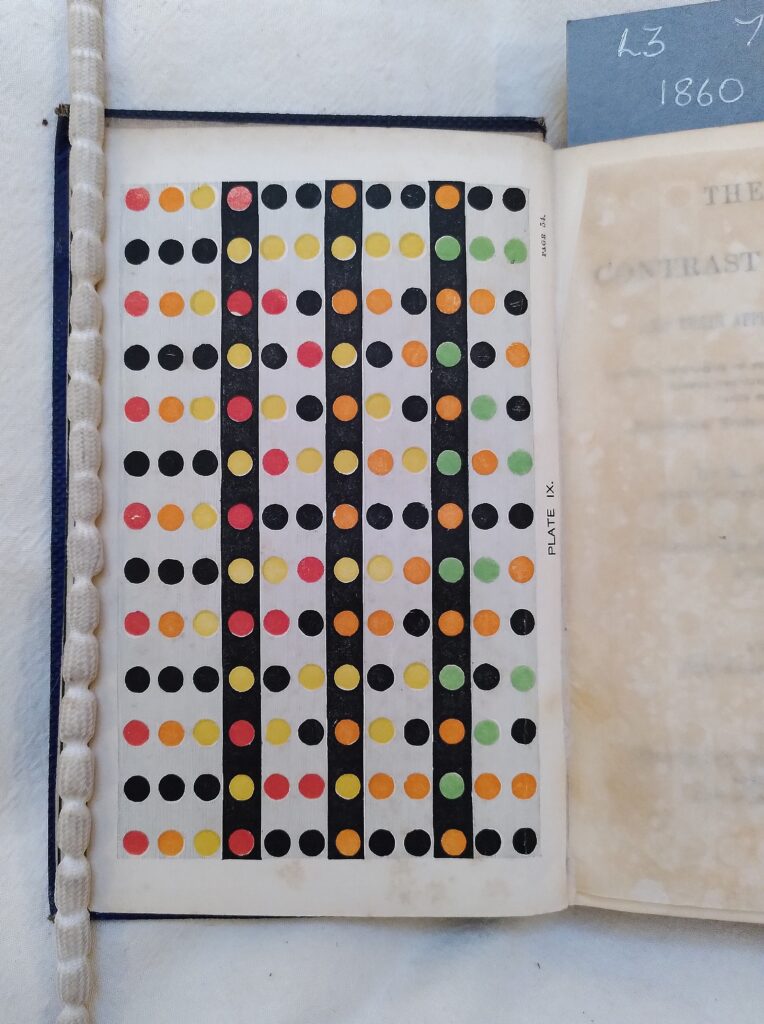
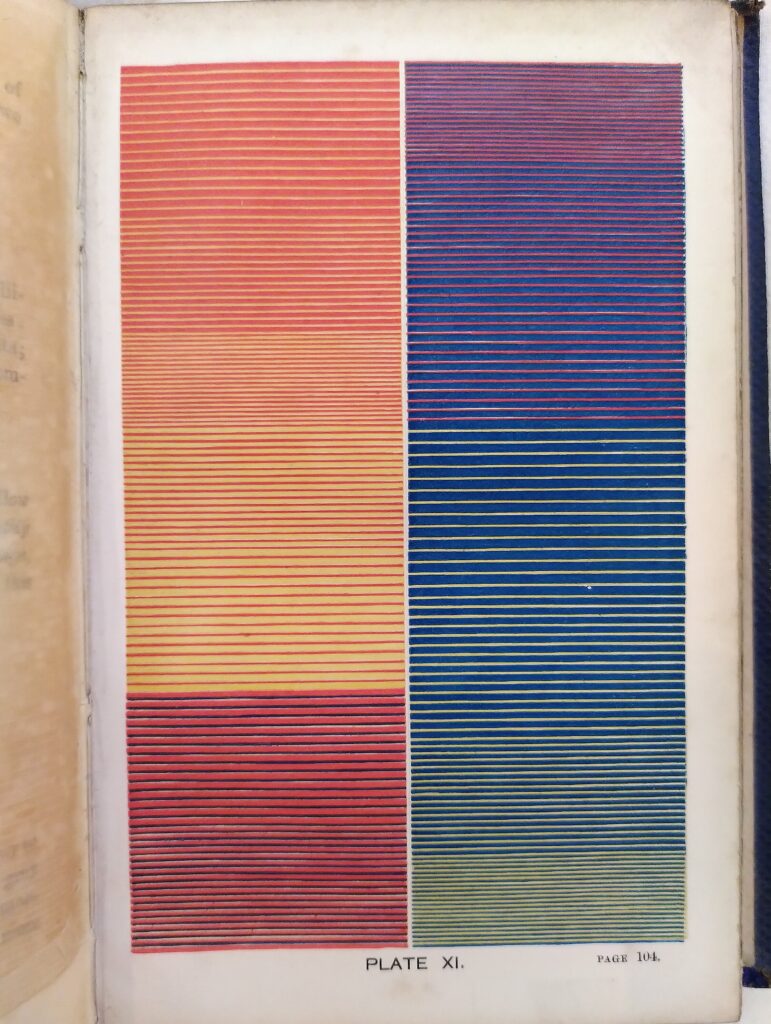
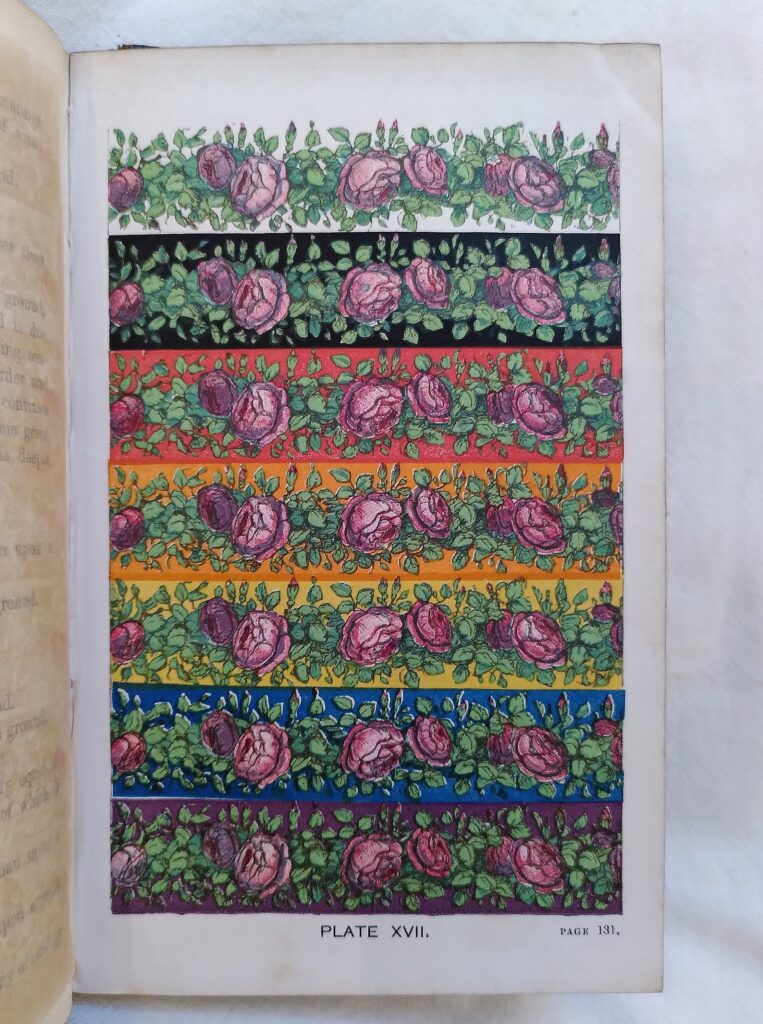
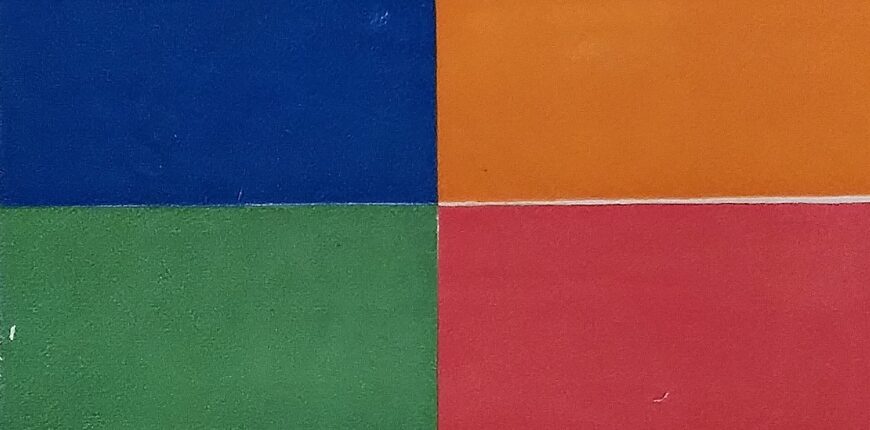
In 1824, Chevreul was named director of the dye works at the Gobelins Manufactory in Paris, after complaints were made about the quality of the dyes used in their tapestries. While investigating the company’s much-criticised black dye Chevreul observed that, although the dye was first-rate, it appeared weak and reddish when surrounded by blues and purples – an effect he called ‘simultaneous contrast’. He explored the ramifications of the concept in his book De la loi du contraste simultané des couleurs (1839), which provides a comprehensive colour theory and design principles for all the visual arts. Following thorough investigation, Chevreul concluded that ‘In the case where the eye sees at the same time two contiguous colours, they will appear as dissimilar as possible, both in their optical composition and in the strength of their colour’.
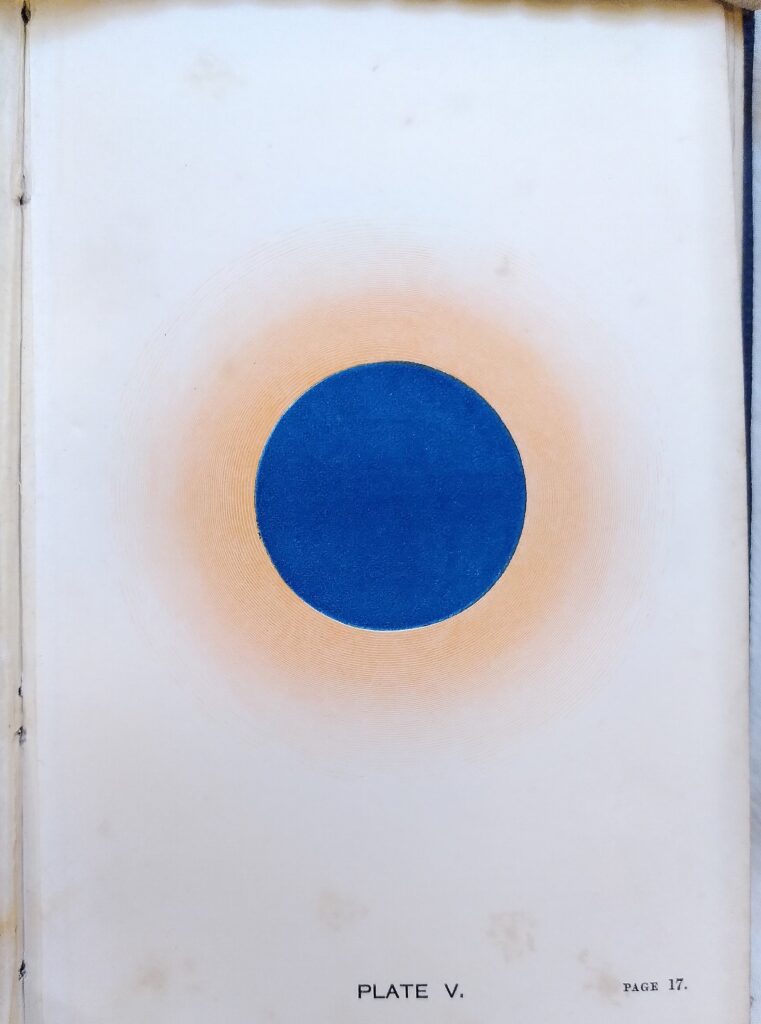
Chevreul’s book was incredibly influential, and was translated into a variety of languages. The first English translation, by Charles Martel, was published in 1854 and a second, by John Spanton, followed in 1857. The latter, of which the DEI holds the new 1860 edition, was supplemented with 17 coloured plates, which represent striking examples of Victorian chromolithography. Our copy was presented to the Institution by Major General Timbrell in 1889, and includes a paste-in noting Chevreul’s death on the 9th of April that year, at the impressive age of 103. The book would certainly have been of interest to the artistically-minded proprietors of the library at that time, which included the architect and painter Edward Ashworth.
“The value of this book has been universally recognised … A recent critic has said, with equal truth and eloquence, – “Rarely has a subject of enquiry, so fraught with beautiful and ready applications, been presented to us. To be familiar with this book is to possess a new sense. Every object in art and nature speaks a new and exciting language. Colour becomes music to the eye.”
(Translator’s Preface, 1860 edition)
Chevreul’s theories about colour and contrast were so influential that today we simply take them for granted, but at the time they were truly groundbreaking. As a professional chemist, Chevreul was able to apply scientific method to his study of visual phenomena. The impact of this work reached beyond the world of science, particularly influencing both the Impressionist and Neo-Impressionist art movements.