Lady Maria Callcott, Letters on India, (1814)
Classmark: G 11.6
Maria Dundas, later Graham, and finally Lady Maria Callcott, was a travel writer and art historian, who was born near Cockermouth in 1785. In 1803, she spent six months as a teaching assistant in Barbara Seton’s school in Bideford. In December 1808, Maria left England for India, travelling widely around the south and east of the country, sometimes accompanied by her husband, Lieutenant Thomas Graham, who she had met and become engaged to on the ship that delivered her to Bombay (now Mumbai).
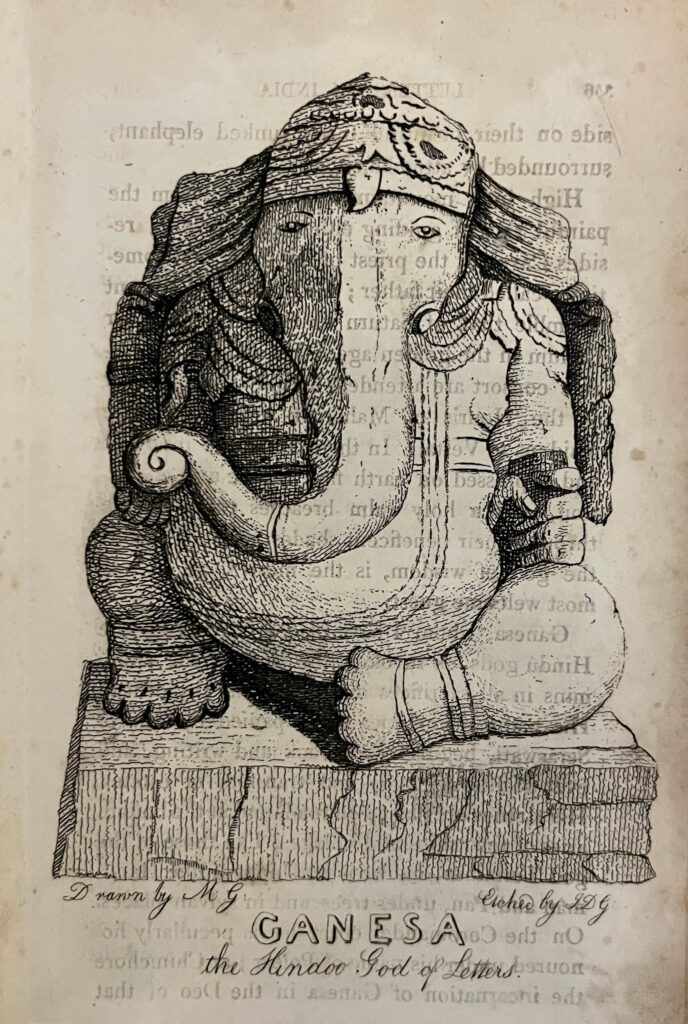
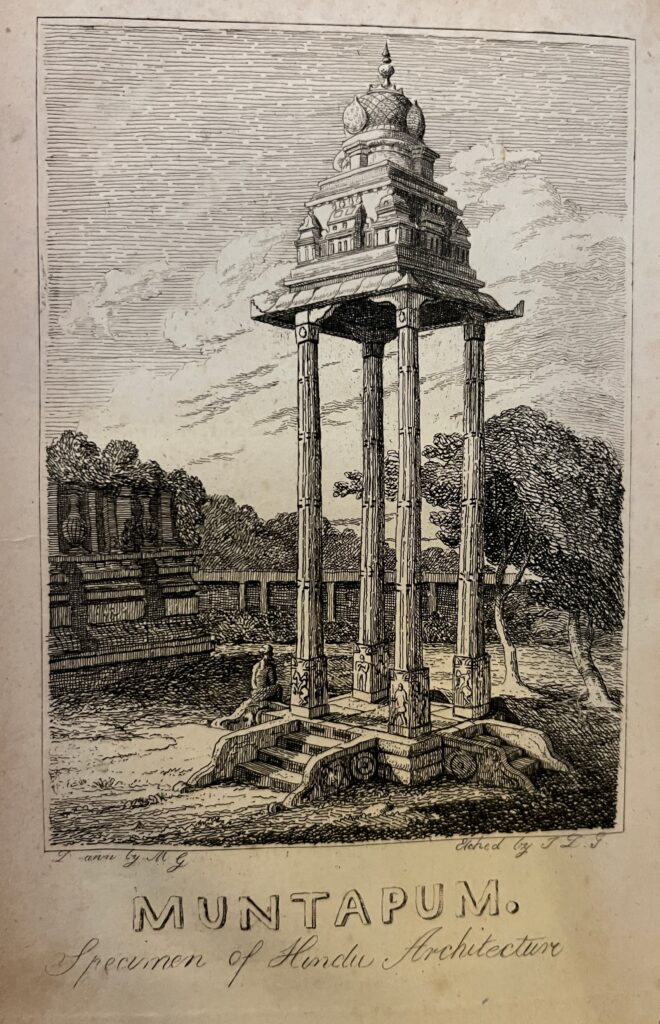
The text is accompanied by Callcott’s own drawings, etched by Mr J. D. Glennie.
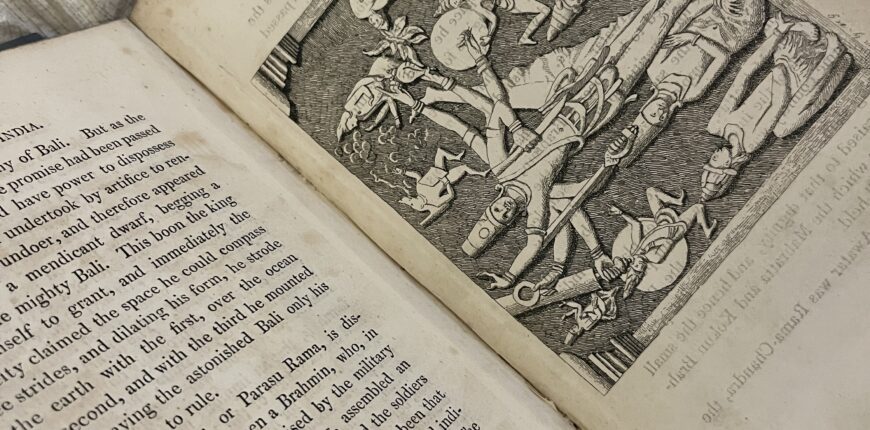
Her observations on the people and antiquities that she encountered were first published in Journal of a Residence in India, (1812). Letters on India was published two years later, and it is a first edition of this work we hold here at the Devon and Exeter Institution. In the preface, Callcott explains that:
“it is written solely with the design of being useful to such as are called upon to go at an early period of life, to India, and who therefore cannot have had time to make themselves acquainted with even the general outline of the history, religion, or science of that country”
Rosemary Mitchell, writing about Callcott for the Oxford Dictionary of National Biography, called her “one of the most significant travel writers of the early nineteenth century”, observing that she both explained and celebrated Hindu culture and achievements.
“Although not uncritical of the Indian way of life, she was appreciative and open-minded: an approach which was to become increasingly less apparent as evangelicalism and utilitarianism impacted on attitudes to India in the 1830s and 1840s”
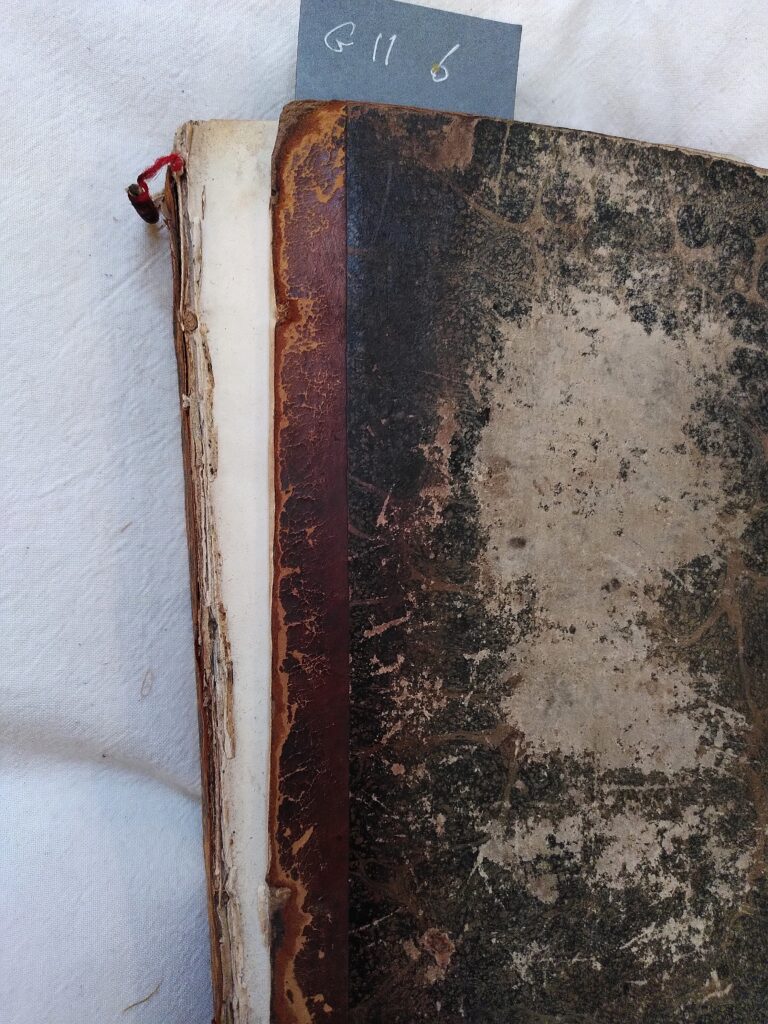
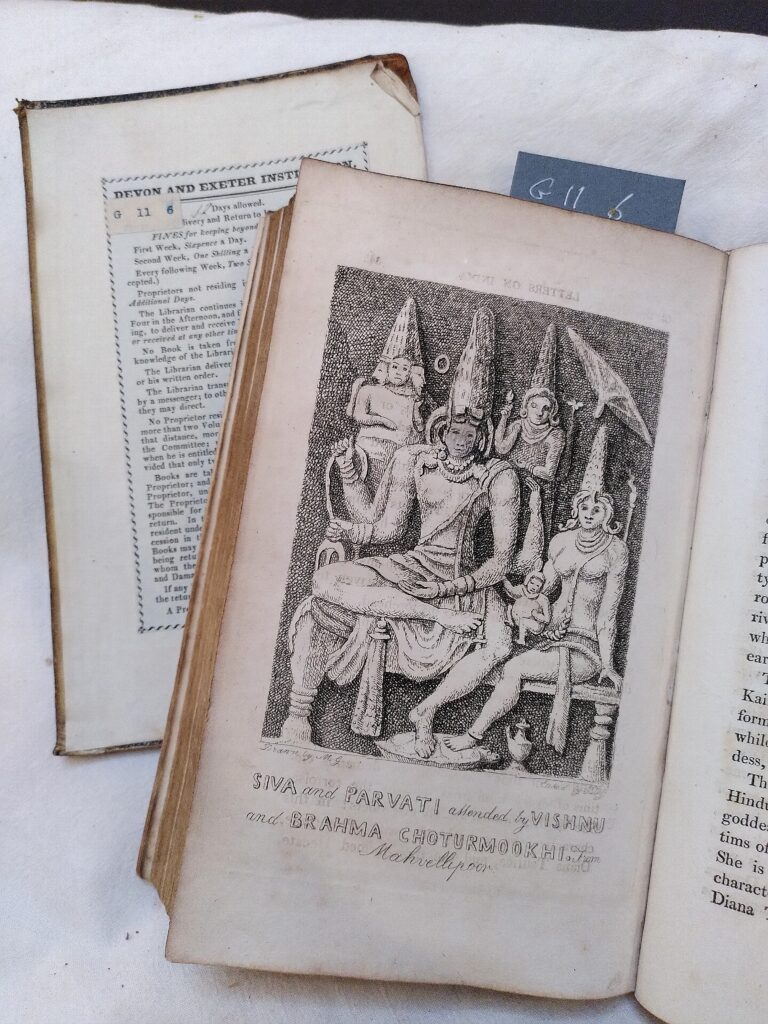
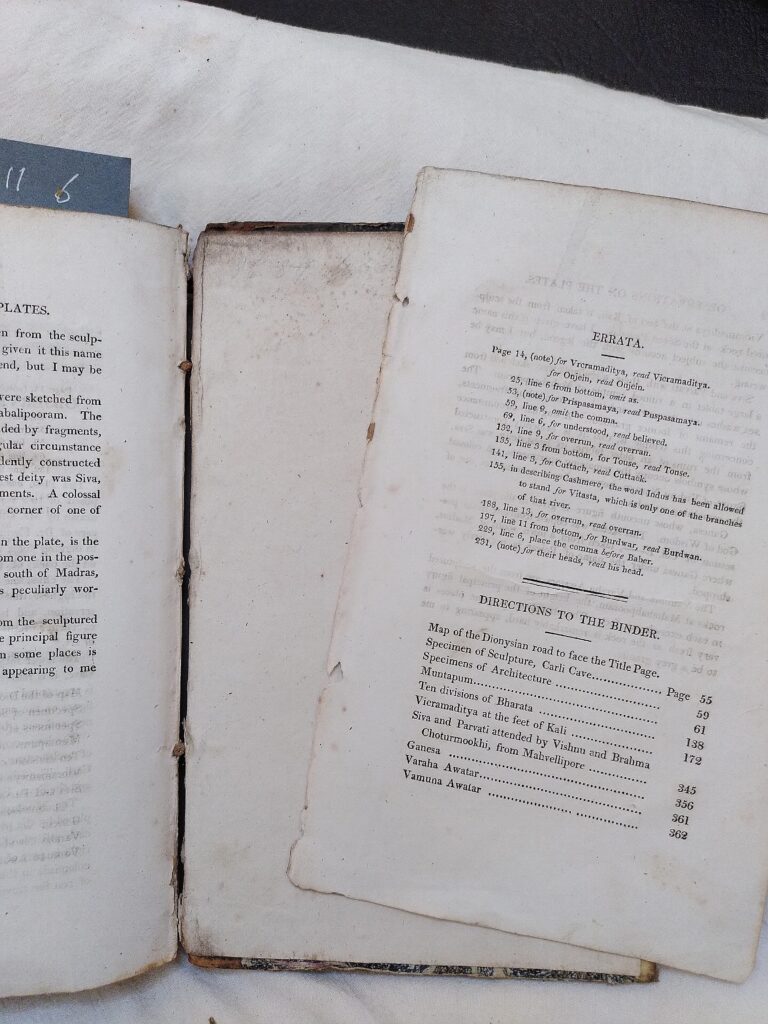
The cost to carry out conservation work on this book would be £220. We are very pleased to say that we have received a donation to cover this work! Thank you to the generous sponsor.