J. M. W. Turner (1775-1851)
An antiquarian and picturesque tour round the southern coast of England illustrated with eighty-four plates, from drawings by J.M.W. Turner, R.A., and others (1849)
In 1811, J.M.W Turner received a commission from publishers and engravers George and William Bernard Cooke to visit the South West. Turner was already a significant figure in the art world by this time – he had been publicly exhibiting at the Royal Academy for 20 years – and the Cooke brothers would have been well aware of the commercial potential of his work. Meanwhile, Turner himself was becoming “increasingly interested in the potential of engraving as a means of disseminating his work to a wider public” (Smiles 4). Based on Turner’s watercolours, and pictures commissioned from other artists, including William Westall, the Cookes produced a series of high-quality copperplate engravings of seascapes and coastal views. These were first issued to subscribers in installments, each comprising three quarto-sized plates and two vignettes, along with a description of each location, and eventually collected in Picturesque views on the southern coast of England (1826). This series was a turning point in the standard of prints based on Turner’s work, and from here on printmaking became a major part of his output.
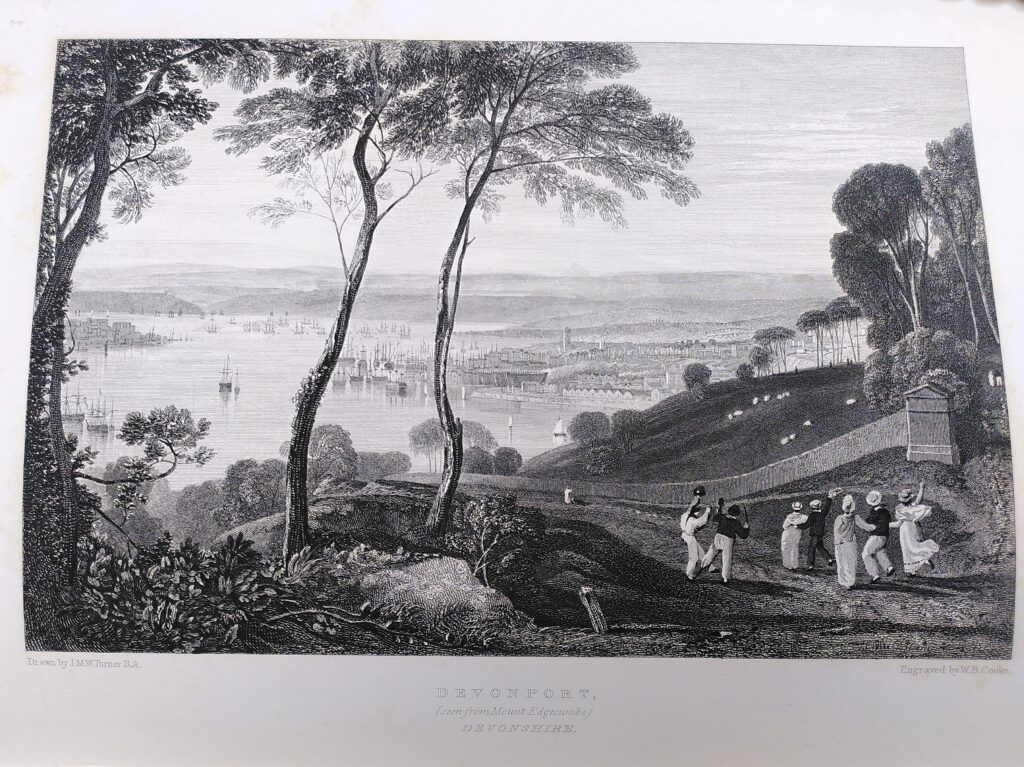 Turner travelled through Dorset, Devon, Cornwall and then Somerset, producing numerous pencil sketches from observation, which were then turned into watercolours back in his London studio – some of his best works in this medium. He also produced six finished oil paintings, which he exhibited in his own gallery in 1812. Turner took a close interest in how watercolour could be successfully rendered by engravers, and offered detailed instructions on how his paintings should be reproduced. Although he personally supervised the engravers to ensure the quality of the prints, he soon disagreed with them, and with the book’s publisher. Of the 48 plates intended to be supplied by Turner, only 39 were published, with the final prints being issued in 1826.
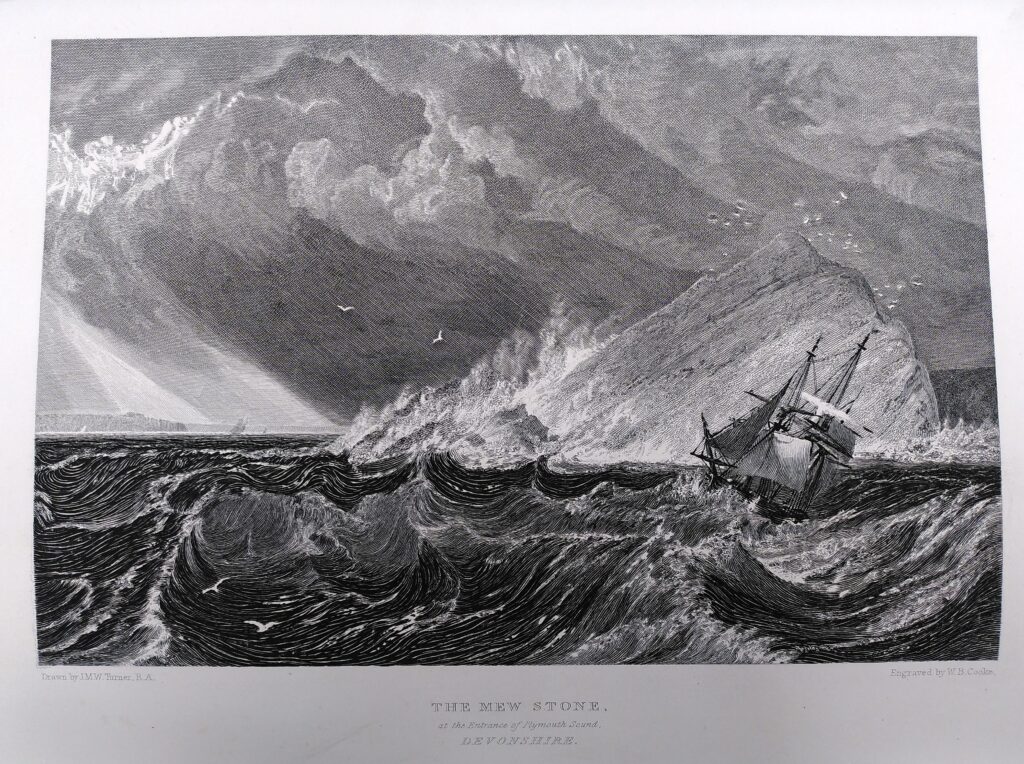
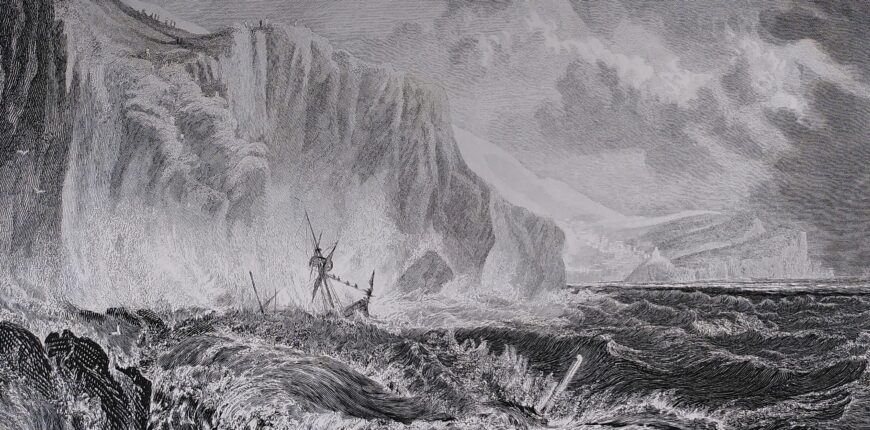
The finished prints showcase both Turner’s talent and the beauty of the South West coast, and reflect his ongoing interest in the destructive power of nature. For instance, the motif of the ship in peril, which recurs throughout his work, can be seen in prints of “The Mew Stone” and “Ilfracombe”. His fascination with dramatic atmospheric phenomena like sunbursts, thunderstorms, and rain, is also evident here; “Land’s End” and “St Michael’s Mount” are striking examples of his ability to capture the interplay of sunlight and rain.
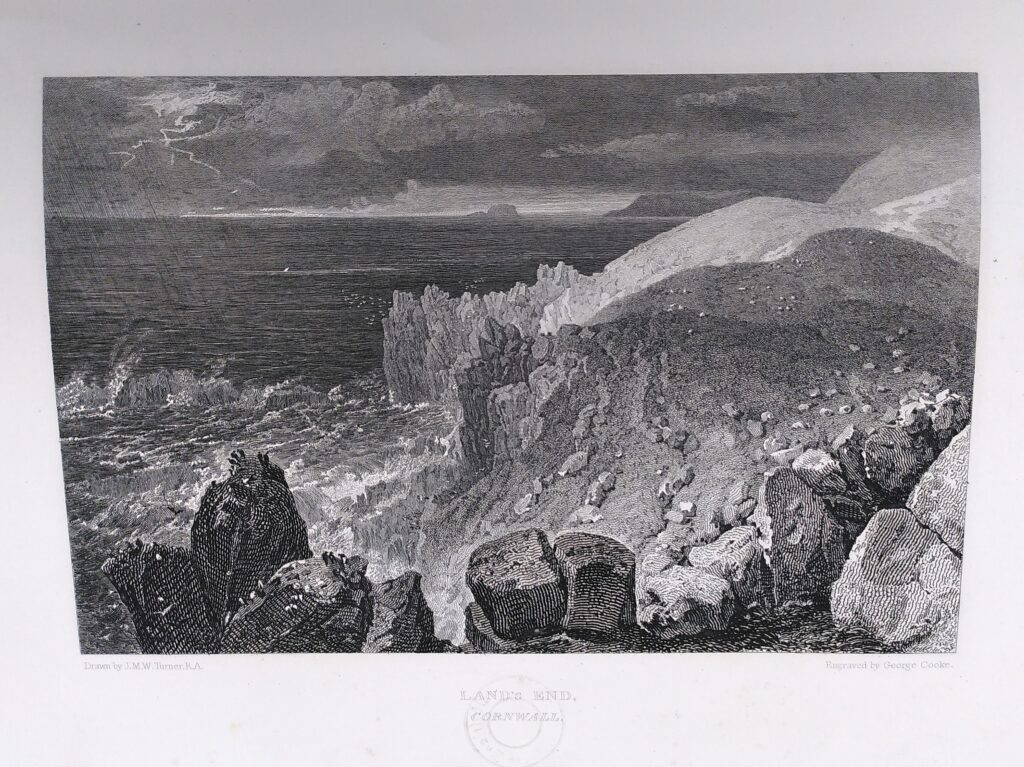
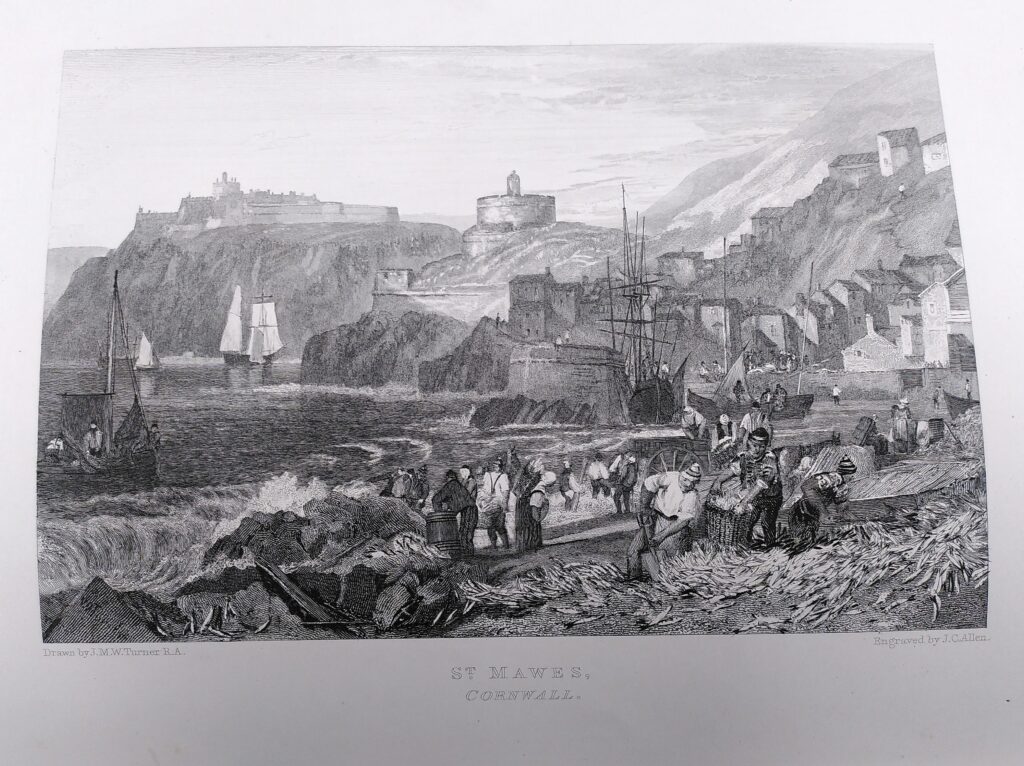
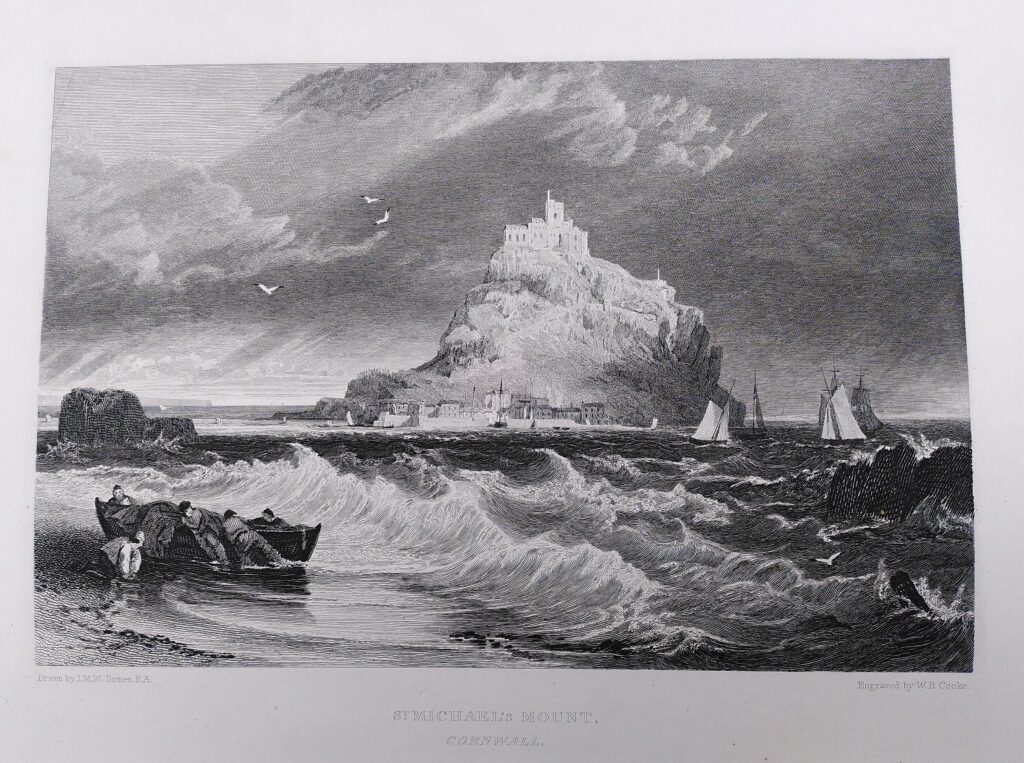 In 1849 Turner’s plates from Picturesque views were reissued in An antiquarian and picturesque tour round the southern coast of England (1849), which has been identified as a star item by the DEI’s recent Collections Review. It is not only Turner’s prominence as an artist which makes this a significant object within our heritage collections. The images also provide a fascinating insight into the changing coastal communities of the South West in the early nineteenth century. The figures in Turner’s compositions are often engaged in traditional industries; for instance, the Cornish fishermen in “St. Mawes” bringing in the pilchard harvest. But the work itself is a testament to the growth of tourism in the region during this period, a new industry which would transform many seaside towns. Turner planned his journey with the help of early tourist guidebooks – Nathaniel Coltman’s The British Itinerary (1799) and John Feltham’s Guide to all the watering and sea-bathing places (1803) – and, in turn, his pictures fuelled tourism in the South West by showcasing the glories of its rugged coastline. In An antiquarian and picturesque tour, they are incorporated into an actual guidebook, complete with travel itinerary. While the original collection presented Turner’s views alphabetically, here they are arranged geographically, and supplemented with an epistolary travelogue that combines information from guidebooks and county histories with personal observations, all written “in the unpremeditated language of a tourist” (vi).