George Rowe (1796-1864)
Scenery in the north of Devon (c.1835)
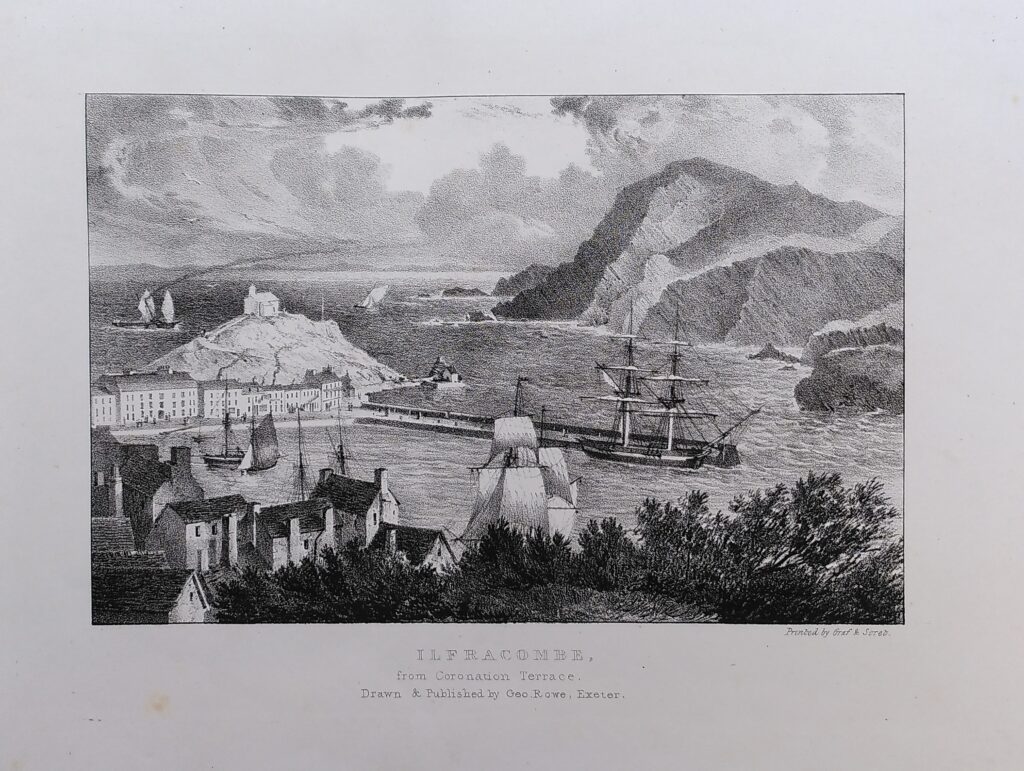
George Rowe, who was born at Exeter in 1796, was one of nineteenth-century England’s most prolific topographical print makers. In 1826, he took up the post of Drawing Master at the recently-established Mount Radford School, and supplemented his income by producing topographical views of Exeter, Plymouth, and local seaside resorts. His Forty-eight views of cottages and scenery at Sidmouth (1826) has also been identified as a star item in our Collections Review.
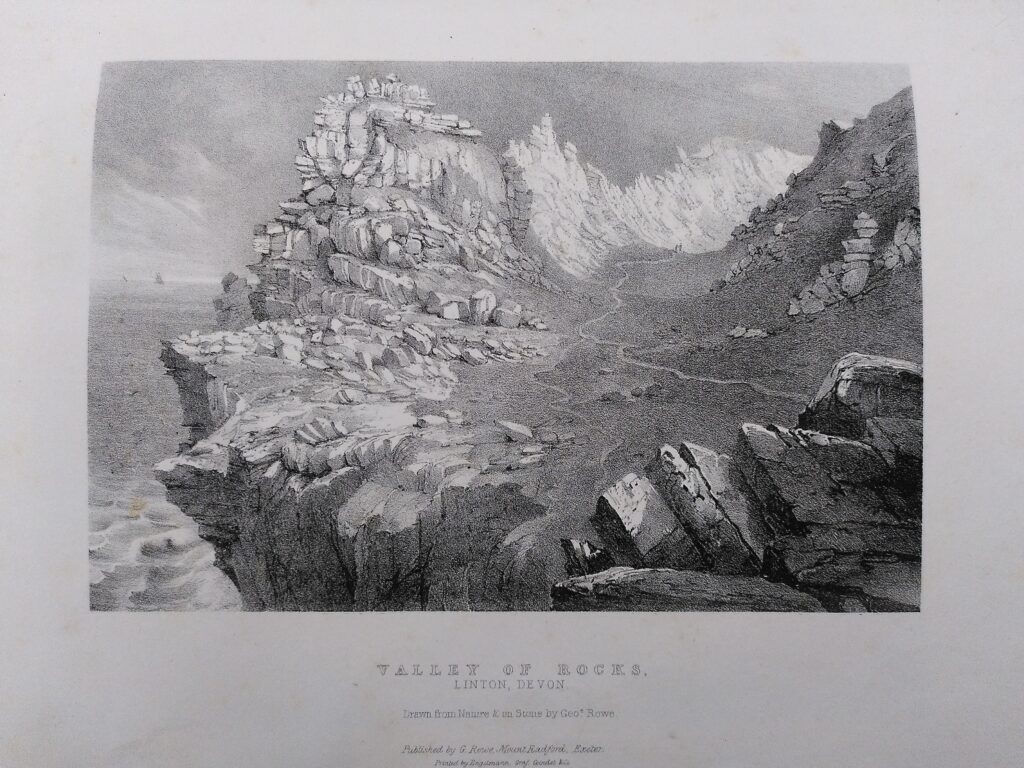
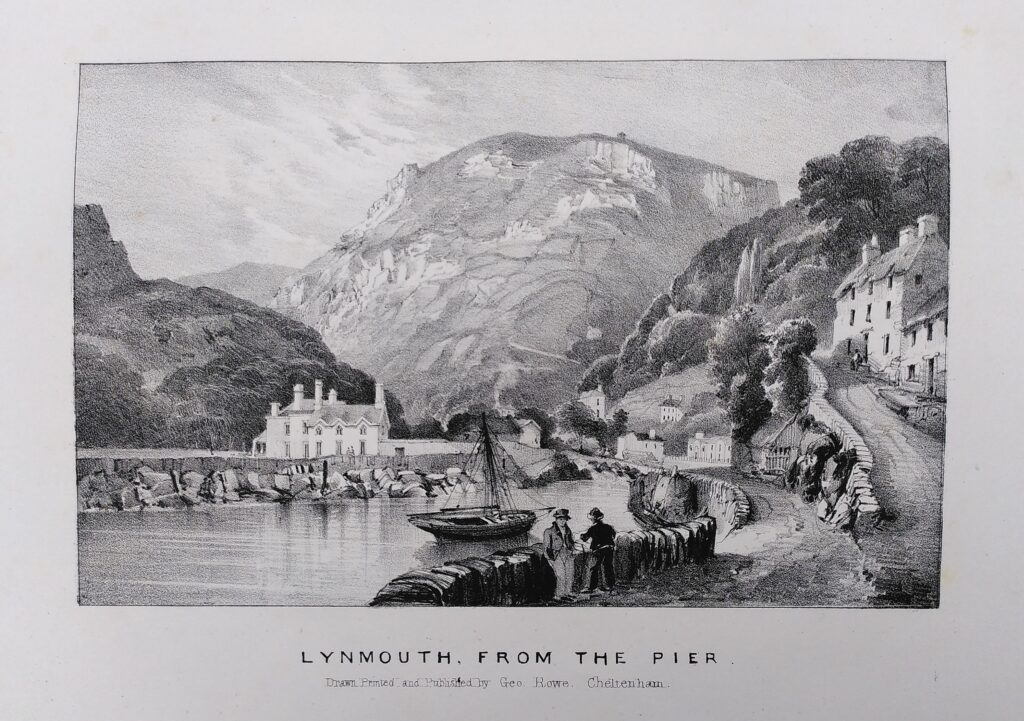
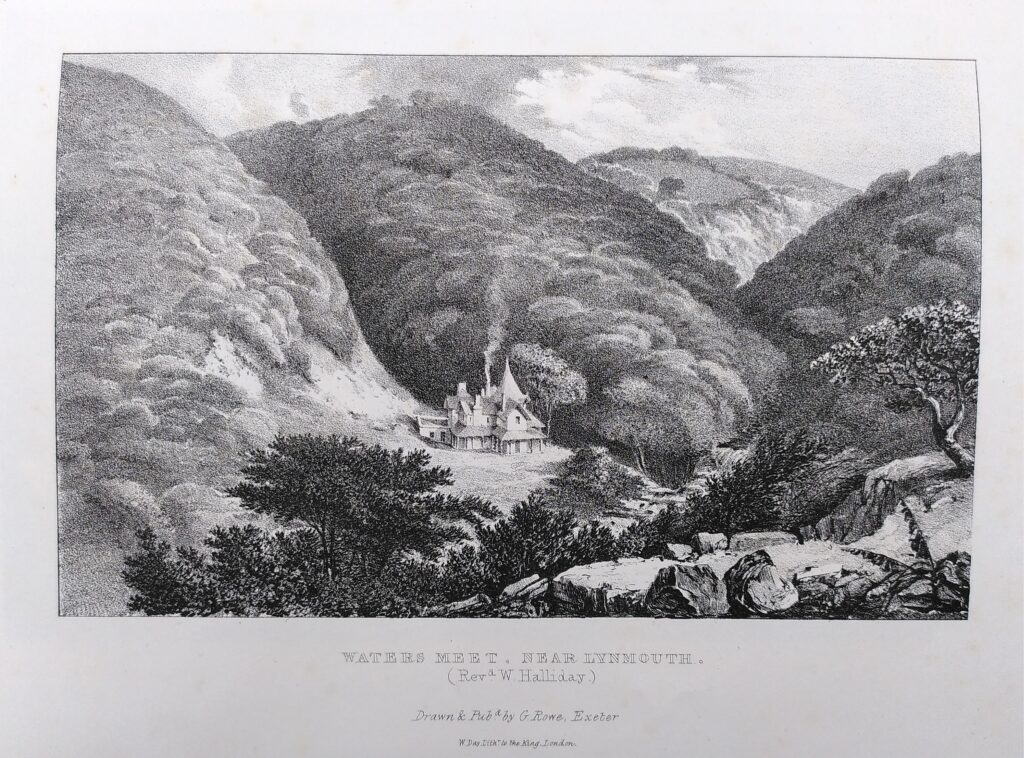
While teaching at Exeter, Rowe fell in love with Philippa Curtis, one of his pupils. When her guardian, Mrs. Gardner, became concerned about the budding romance and removed her to Lynton, he followed. In 1828, the two were married at Heavitree Church. Phillipa was a talented artist in her own right, who helped Rowe to produce many of his prints, as well as caring for their ten children. Around the time of his marriage, possibly inspired by their romance, Rowe produced a set of 20 lithographs, a varying selection and number of which were issued in booklets under the title The Beauties of the North of Devon (c.1828). They show places which would have been well-known to the courting couple: Lynmouth, the Valley of the Rocks, Waters Meet. Some of these images were re-issued in Scenery in the north of Devon (c.1835), alongside new lithographs produced after the Rowes moved to Cheltenham in 1832.
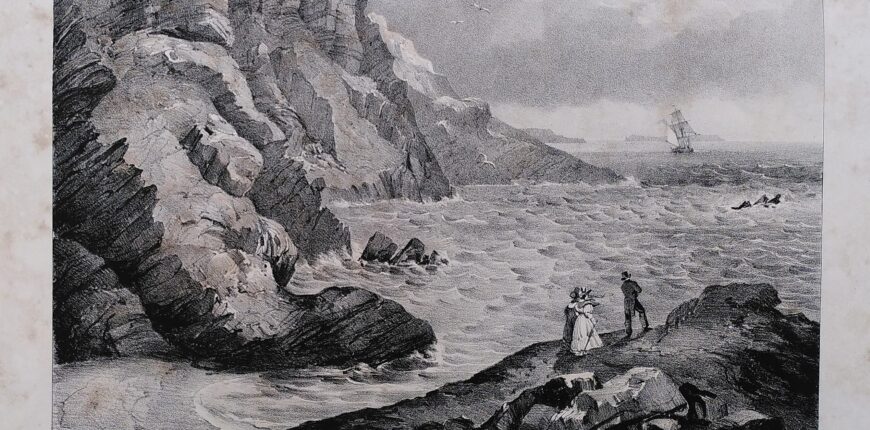
 Scenery in the north of Devon likely had sentimental value for the Rowes; living in a new city, busy with work and their growing family, they may have been thinking back to the scenes of their happy courtship. We might even imagine that the group looking out to sea in ‘Scene from the Tunnel, Ilfracombe’ represents George, Phillipa, and Mrs. Gardner. But the collection also made commercial sense. By the 1830s, the internal tourism industry provided a growing market for topographical prints, which were often purchased as souvenirs. Improved transport networks, and fashionable appreciation of the ‘picturesque’, drew people to the dramatic coastlines of the South West. George Rowe capitalised upon this new market, and his works helped to promote the area further. George Pycroft later wrote:
“His published works have perhaps done more than any similar effort to exhibit pictorially the beauties of Devon, Cornwall, and Somerset. In afterlife he commenced the publication of lithographic views, which became the most popular means of attracting a host of tourists to localities of picturesque beauty, unknown, until thus, with charming accuracy, the scenes were brought before the eye of their admirers. Their fidelity was curiously tested by the fact that certain innkeepers gave the artist free quarters as an acknowledgement of the service rendered to them in bringing strangers into their localities.” (Art in Devon 126)
The Rowes lived at Cheltenham for twenty years. By 1852, George’s business had fallen into financial difficulties, and he emigrated to Australia alone to try his luck in the gold fields. Finding little success as a prospector, he soon returned to producing topographical views, painting watercolours of the Bendigo and Castlemaine gold diggings. He returned to England around 1859, and lived on Heavitree Road, Exeter. In 1862, his panoramic views of Australia won a special medal at the International Exhibition in London. He died in 1864, and was buried in Heavitree Churchyard.