
George Alexander Hoskins, Travels in Ethiopia, above the second cataract of the Nile, etc. (1835)
Classmark: Bay 68 1835 HOS X
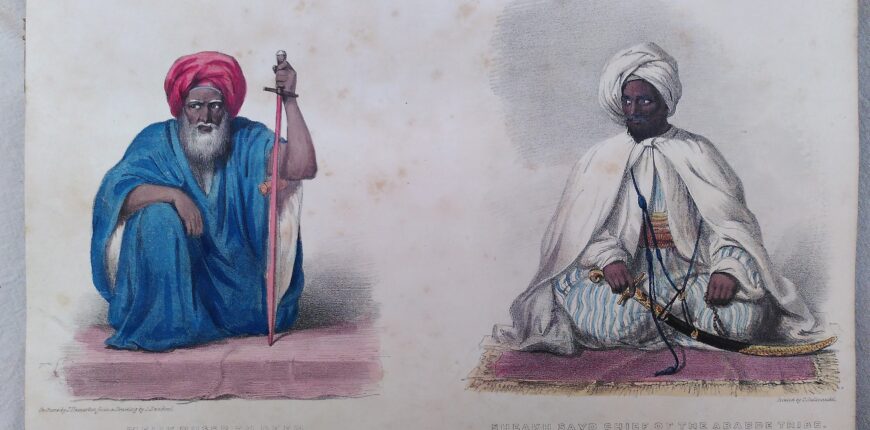
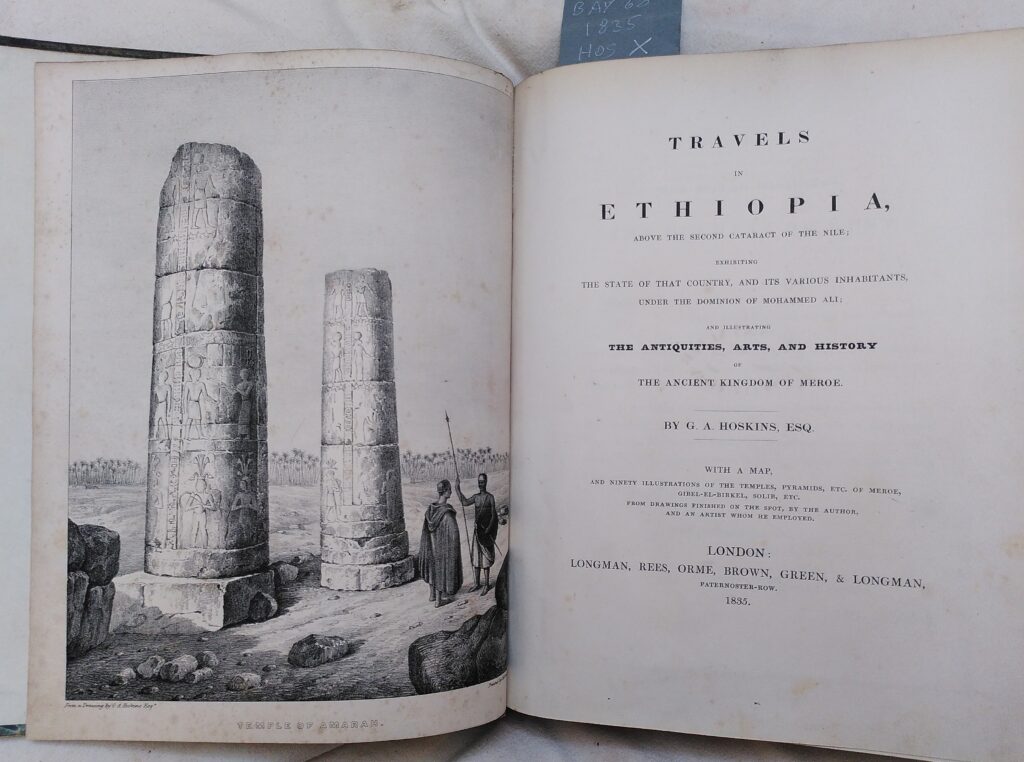
In 1832 George Alexander Hoskins (1802-1863) arrived in Egypt. Like many European visitors at that time he was not an ‘Egyptologist’, but an educated man of means, and an ardent traveller. Hoskins had planned to spend only a few weeks at Thebes, but his growing fascination for Egyptian antiquities kept him there for twelve months. He was about to return home, when the arrival of Italian artist L. Bandoni persuaded him to carry out his original plan of visiting Meroe, in modern-day Sudan. Bandoni was widely acclaimed and recommended, and seems to have been an intrepid explorer; armed with his trusted Spanish rifle, he assured Hoskins that “ non ha niente paura” – he was not afraid of anything.
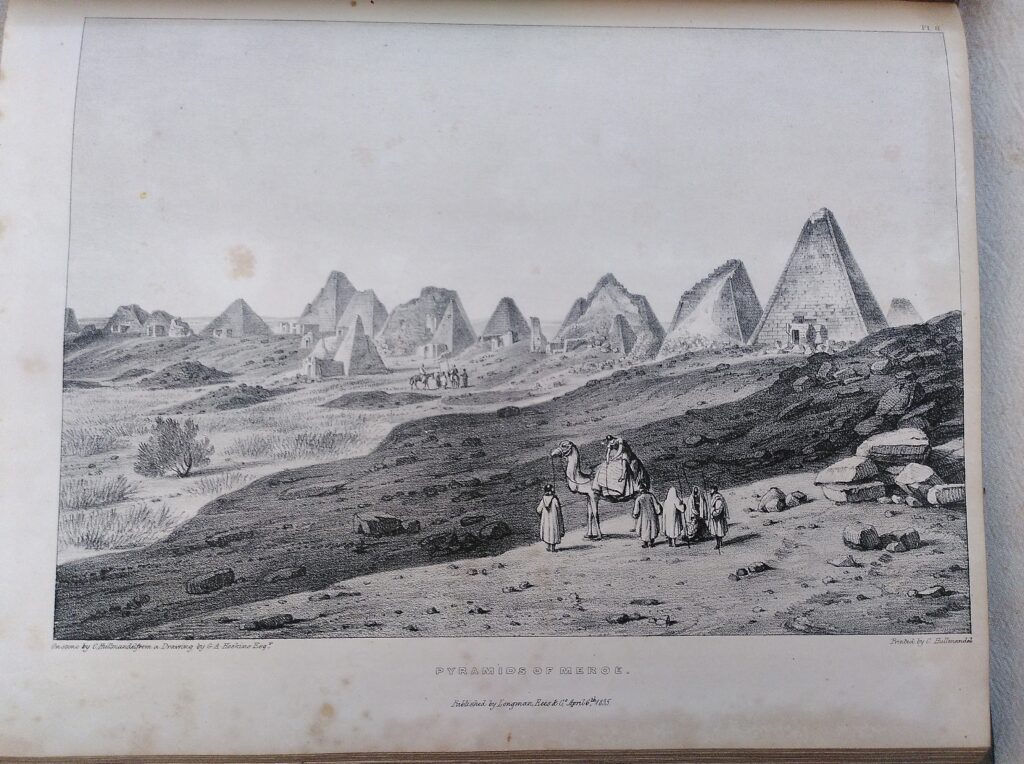
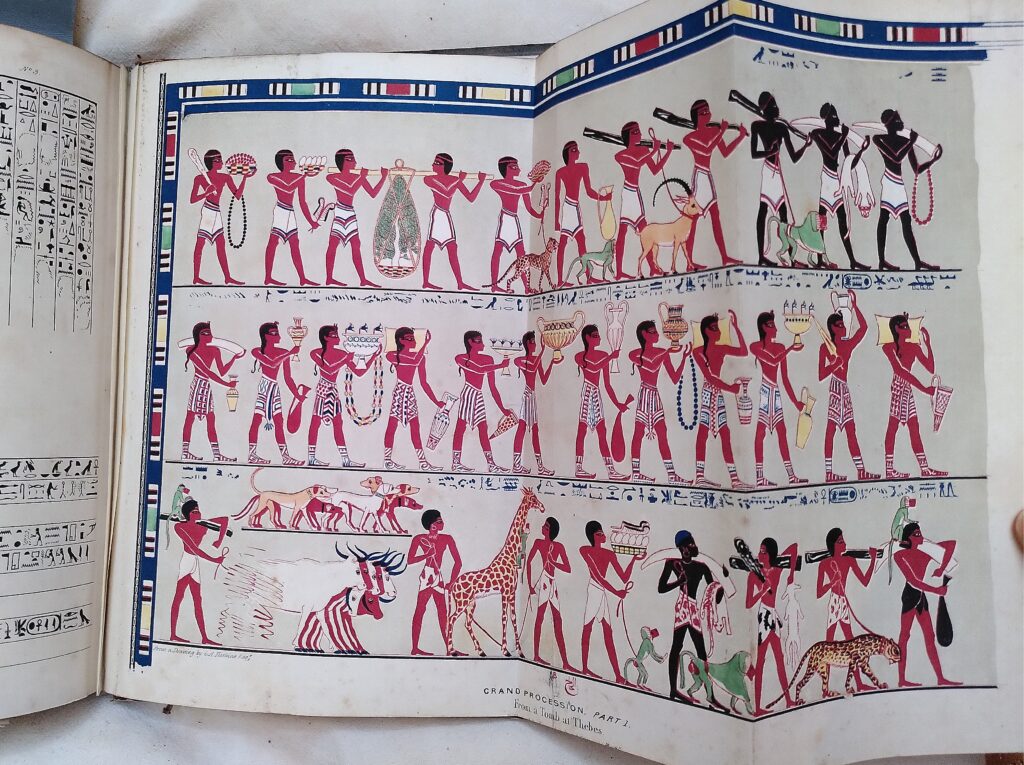
Following the accounts of Greek and Roman authors, Hoskins believed that the ancient pyramids of the Upper Valley of the Nile were older than those at Giza. Meroe, he argued, was the “the land whence the arts and learning of Egypt, and ultimately of Greece and Rome, derived their origin”. A contemporary reviewer praises Hoskins as an “an elaborate and faithful describer”, but regrets that he should have approached the antiquities of this region “with his mind already fully preoccupied by theories respecting them” (Edinburgh Review 46). Hoskins’ interpretation, which gave primacy to Classical traditions, was outdated at the time, and has since been proven incorrect. Nevertheless, Travels in Ethiopia made a valuable contribution to the developing discipline of Egyptology. This was the first history of the Nubian-Kushite Kingdom of Meroe in English, and it gives detailed descriptions of places which, at the time, had been visited by only a few Europeans. Moreover, the drawings produced by Hoskins and Bandoni document details of important archaeological sites which have since disappeared.
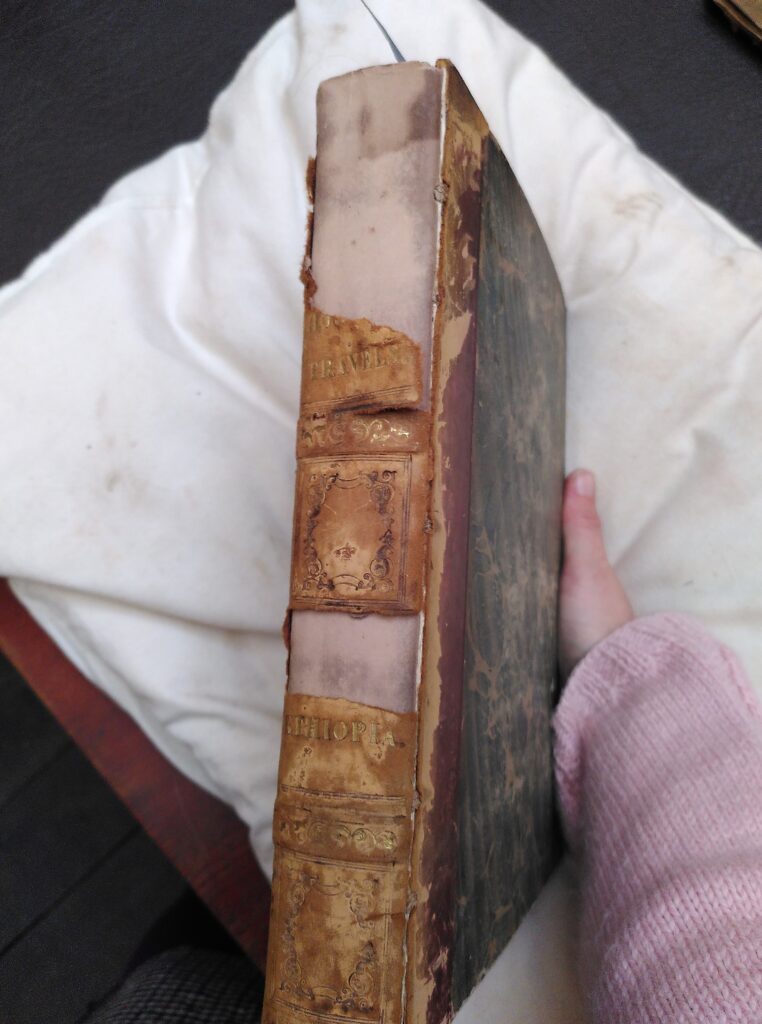
The cost to carry out conservation work on this book would be £175. We are very pleased to say that we have received a donation to cover this work! Thank you to the generous sponsor.