
Elizabeth Courtenay (1801-1867)
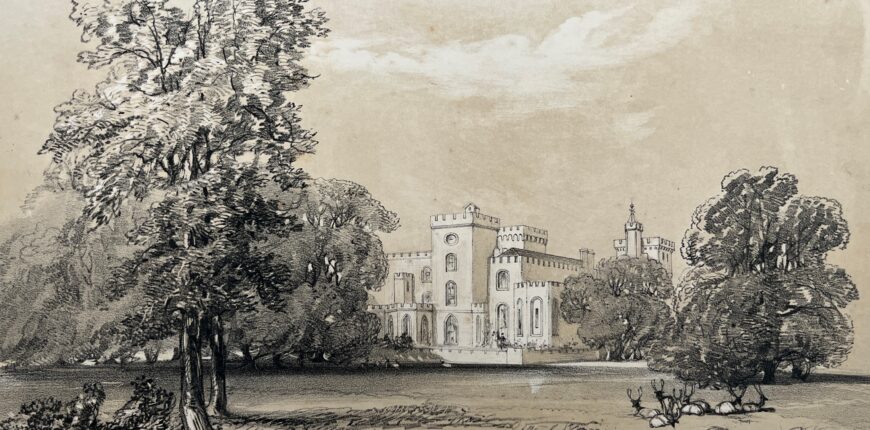
Views in the south of Devon (c.1845)
In April 1844, a prospectus in the Exeter Flying Post announced the forthcoming publication of a collection of 14 tinted lithographs based on drawings by Lady Elizabeth Courtenay (1801-1867), ‘published for the benefit of a new school-house at Salcombe’. The artist behind the works, originally Elizabeth Fortescue, daughter of Earl Fortescue, had married the future Earl of Devon, William Courtenay (1807-1888) in 1830. Her husband would succeed to the peerage in 1859, at the same time taking his place as head of the household at Powderham Castle – the ancient seat of the Courtenay family. Both Lord and Lady Courtenay were widely regarded for their local philanthropic work, and their efforts to restore the Courtenay fortunes and estates.
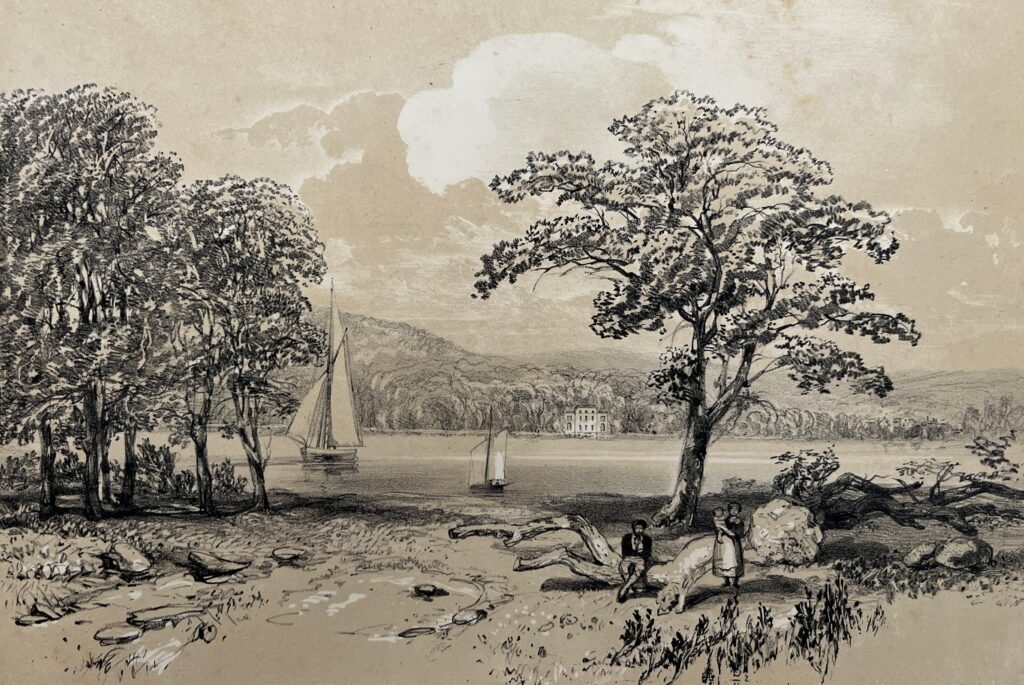
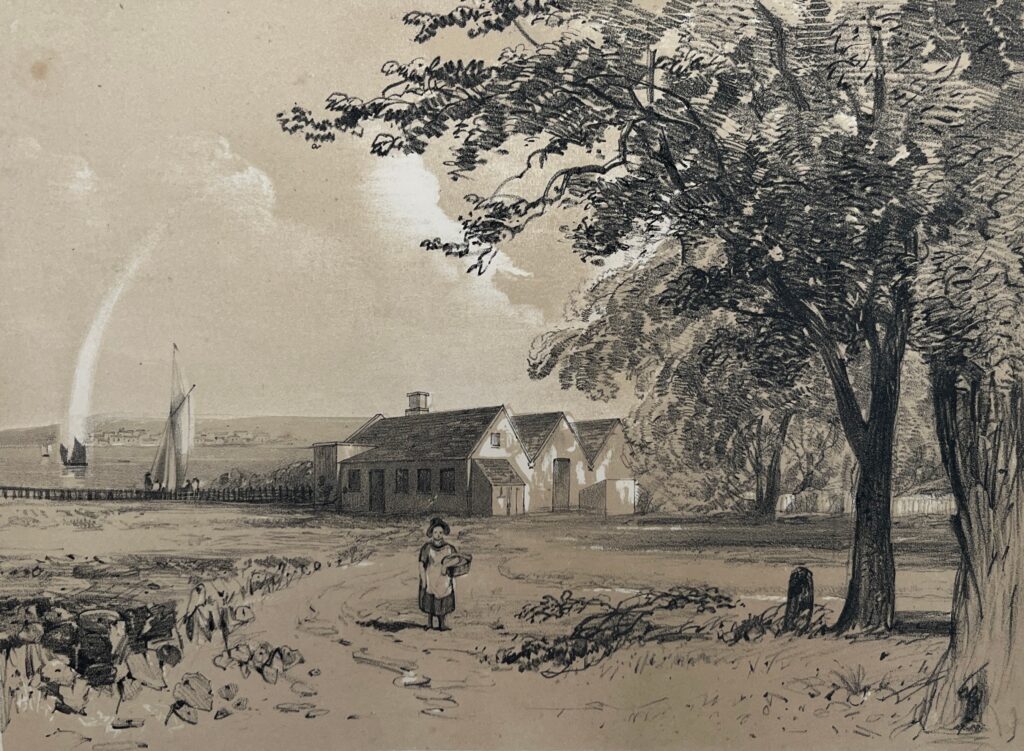
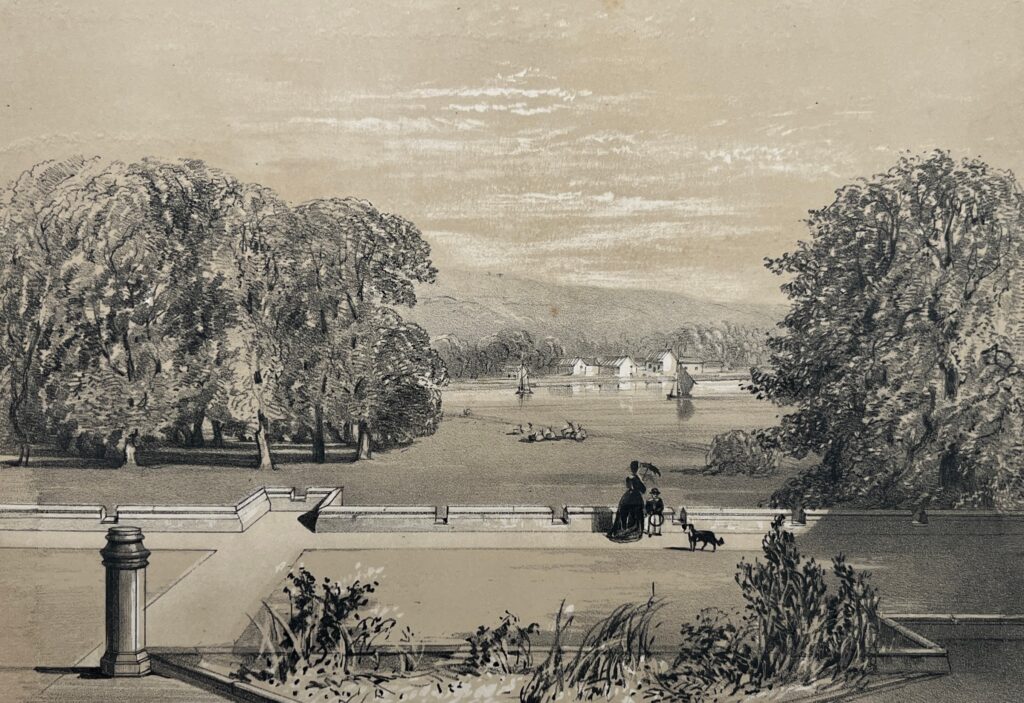 The prints in the collection picture Powderham, as well as nearby locations such as Nutwell Court, Lympstone and Mamhead Parsonage, in idyllic rural settings, emphasising the beauty of their natural environments. It would be hard to look at the illustrations and not to imagine that Lady Elizabeth already felt deeply attached to the Castle and its surroundings, long before she became Countess of Devon. The occasional use of figures in the images suggests a peacefulness to life in this area: a woman and a child gaze out from the terrace at Powderham Castle towards the Exe estuary; a family rest against a fallen tree; a woman slowly makes her way along the path from a boat house. The influence of Romanticism, and the picturesque aesthetic, can be seen in Courtenay’s inclusion of rustic figures like the family of shepherds in the image of “Cofton Chapel”. The composition of the images and Courtenay’s style of mark making – particularly the texture she gives to plants, trees, and sky – recalls the work of contemporary landscape painters like John Constable.
 Our collections review identified Views in the south of Devon as a star item, not only due to its rarity and the obvious significance of its author, but because of the interesting stories it can tell about the life of a Lady. The images reveal details of dress, leisure occupations, and childhood in the early Victorian period – note the boy with the hoop in the picture of “Lympstone”, for example. Courtenay’s pictures also reflect class relations in rural Devon during this period, and the politics of the artist. Churches, ancestral castles, and neoclassical mansions often sit at the centre of the images, where they exude a sense of quiet, beneficent authority; the idyllic countryside is maintained by the careful stewardship of the Church, and aristocratic and genteel landowners. Holding this book here in the DEI library, in a building that was once the town house of the Courtenay family, adds a further layer of significance.
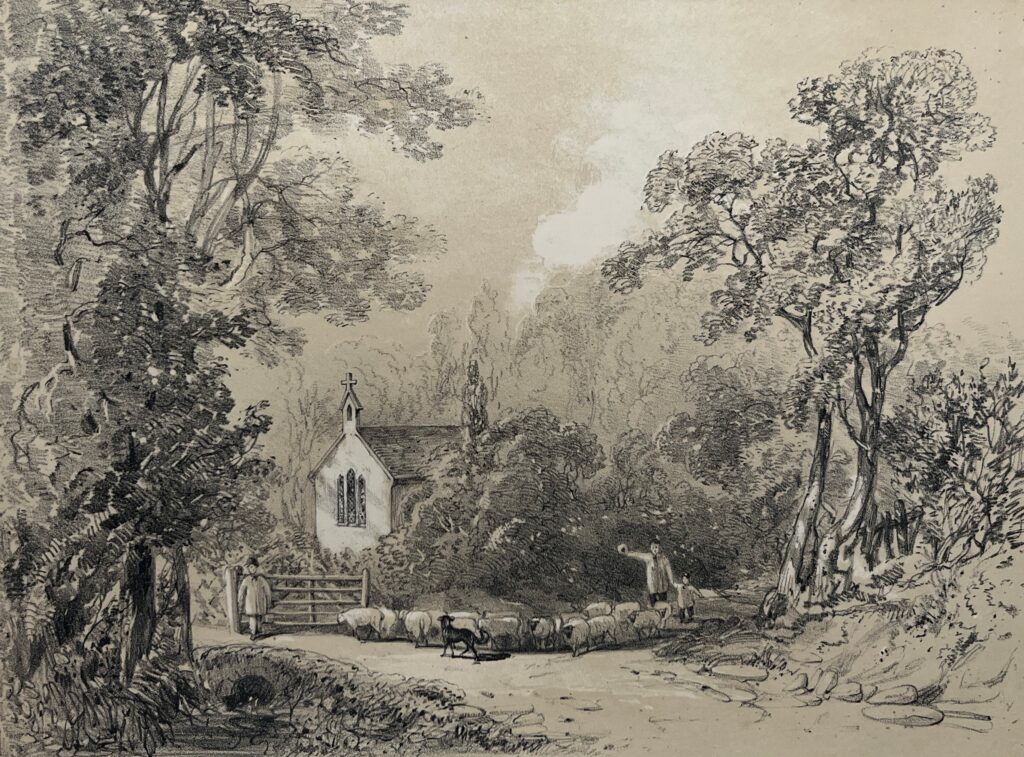 This is an extremely rare work, available in very few publicly accessible libraries, although unfortunately our copy is missing 6 of the prints. A bookplate in the front paste down tells us that this book was ‘given by Thomas Kerslake’, and the DEI’s institutional archive reveals that Mr Kerslake presented a great number of works to the Institution in 1888; Lady Courtenay’s book is amongst a long list recorded in a meeting of the General Committee on 8 October of that year. Kerslake was an Exeter-born bookseller, although he spent the majority of his career in Bristol, before moving to Clevedon during his retirement. A note at the front of the book, written in pencil, reads ‘9 plates only, Sep, 27, 1888’. This was perhaps added by Kerslake when he donated the book, or, more likely, by Edward Parfitt, the Librarian at the time. This tells us that the missing plates never made it onto the DEI shelves.