David Landsborough (1779–1854)
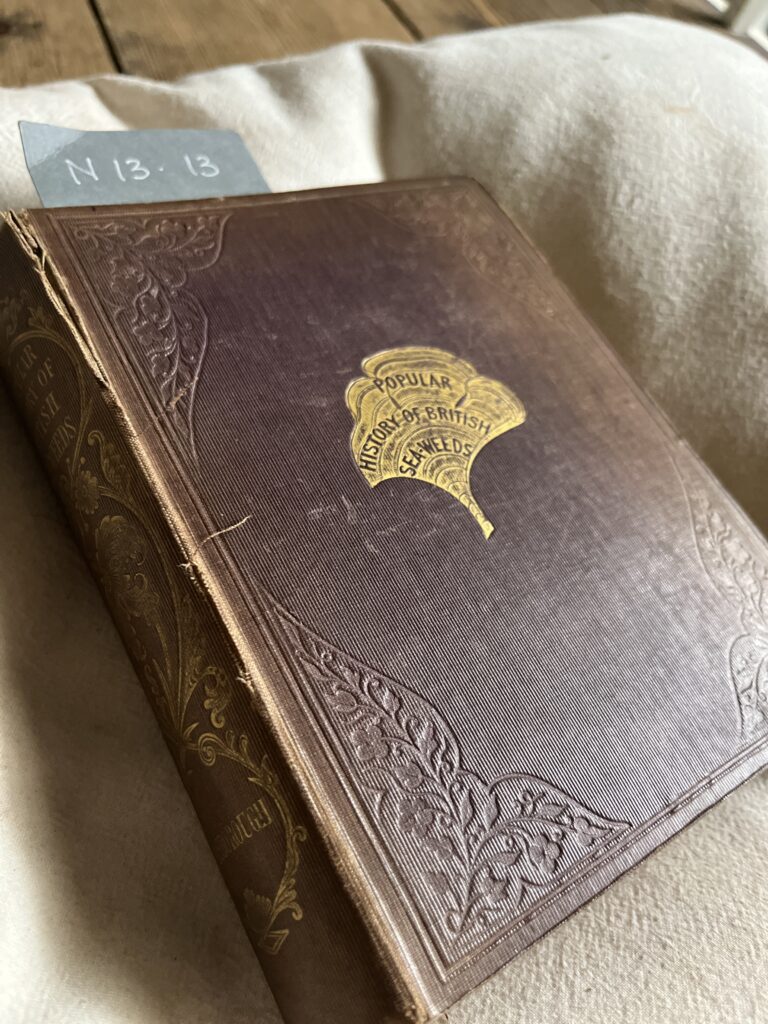
A popular history of British sea-weeds : comprising their structure, fructification, specific characters, arrangement, and general distribution, with notices of some of the fresh-water algae (1849)
Landsborough’s A popular history of British sea-weeds was written not as a specialist work, but as a reference tool for the amateur enthusiasts, although the author expressed the hope that ‘it may not be quite devoid of interest to proficients in science’. As well as being a keen naturalist, he was also a minister in the Free Church of Scotland. Alongside seaweed, he conducted studies into flowering plants, shells and fossils. He had an algae named after him, ‘Ectocarpus Landsburgii’, following his assistance to pre-eminent botanist Dr William Harvey in the compilation of his work Phycologia Britannica. In A popular history, Landsborough describes this algae as not having ‘much beauty to recommend it, but it is a little curiosity’. He passed away in 1854, having enjoyed some success from his publication: a second edition was published in 1851, and a third edition three years after his death.
A large proportion of the Doctor’s correspondence consisted of the interchange and distribution of sea-weeds, zoophytes, and shells, specimens of which he sent broad and wide over the kingdom with no slack hand. How will his correspondents miss his familiar letters, inclosing the last-found alga.
– Obituary to Dr. Landsborough, Fife Herald, 21 September 1854
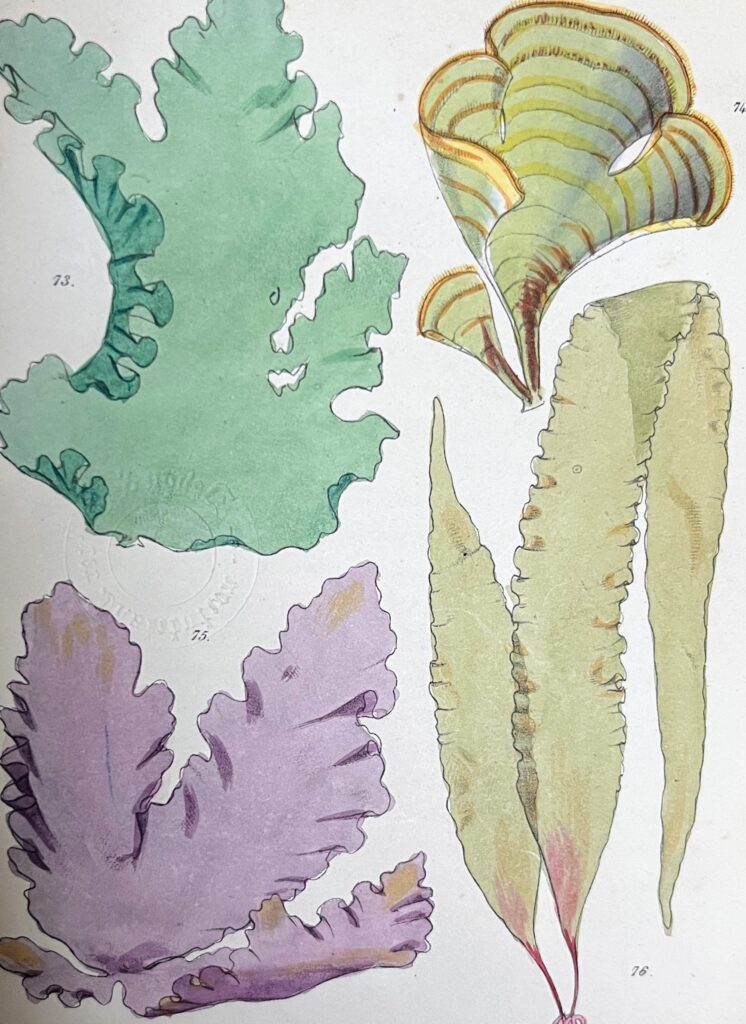
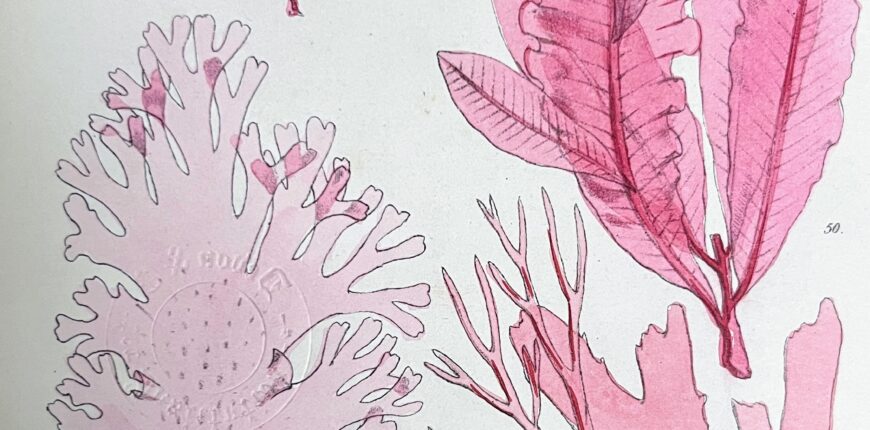
The charm of the work owes no small part to the artwork, created by Walter Fitch, who specialised in botanical illustration and was known for his skill in lithography. On each plate, ‘Fitch lith’ is written in the bottom left-hand corner. Fitch was well known for his contributions to Curtis’s Botanical Magazine, for which he created nearly 3,000 drawings.
We can see from an inscription on the title page that this particular copy of the book was a gift from the author to Mrs Griffiths, who has been called the “Queen of Seaweed”. After the death of her husband, Amelia Griffiths moved to Torquay in the late 1820s. By this time, she was already in correspondence with several prominent experts and had developed a reputation as a specialist in the field. The seaweed ‘Griffithsia’ was named in her honour. With her companion Mary Wyatt, she continued to collect important specimens from the local beaches, publishing a work in 1833 relating to seaweed found on the coast near Torbay. Exeter’s Royal Albert Memorial Museum holds a number of her works in their collections. She supplied Landsborough with many of the examples listed in the book, as she is acknowledged throughout. Another inscription tells us that the book was donated to the Devon and Exeter Institution by Miss Griffiths – presumably one of her daughters.